Showing posts with label Rajkot. Show all posts

Friday, August 15, 2014

Rare Masked Booby spotted near Mahuva ( Bhavnagar, Rajkot, Gujarat, India )

The bird is usually found in tropical zones

Manoj Sanghediya, a 23-year old amateur bird watcher from Datardi Village in Mahuva taluka of Bhavnagar District ( Rajkot, Gujarat, India ), could not identify the large seabird that had fallen in his farm on Saturday.
But he was quick to rescue the sick bird that was unable to fly and take it to Mahuva Town. An environment activist, he often rescues snakes in his village.
masked booby in Mahuva
The bird that he rescued was Masked Booby, a large bird found in tropical zones of theoceans.
“When the Masked Booby was brought on Saturday, it was sick and exhausted. We contacted, Dr. Nayan Patel, a veterinary doctor, who earlier worked with forest department in Mahuva advised us to give glucose to it. We tried to save the rare visitor but it died on Tuesday evening”, said a wildlife activist from Mahuva Chirag Koradiya.
Bird conservationists say that the Masked Booby may have been exhausted and landed in the coastal area in a sick condition. It nests on small tropical islands especially without forests. It breeds in central and western pacific as well as off Mexico.
According to experts, Masked Booby are spectacular divers that can plunge diagonally into the ocean at high speeds. They mainly eat small fish.
“This could be the third time that a Masked Booby was reported to be seen on the Saurashtra coast,” Koradiya said.
Courtesy - Times Of India 

Monday, December 9, 2013

Caracal trapped in gando baval (Prosopis juliflora) rescued

The forest department rescued a female carcal (a wild cat known for its reclusive behavior) that had got trapped in gando baval weeds ( Prosopis juliflora ) in Jatavira Village of Nakhatrana taluka in Kutch district ( Gujarat, India ) on November 23. This is perhaps the first instance of a caracal being rescued after it got struck in wild weed.
Caracal, Felis caracal, Augrabies Falls National Park, N. Cape, South AfricaCaracals usually venture out of their lair at night. There are around 50 of them in the state and are found only in Kutch. One of these wild cats was last spotted by the officers of the Gujarat forest department in 2006. The conservator of Forests D.K. Sharma said that the rescued caracal was female and around three years of age.
When the rescued animal was found on November 25th had injuries on its front left feet. “ On getting information about it, officials rushed to the spot. After clearing the bushes, the caracal was brought to Nakhatrana ( Kutch, Gujarat, India ) for veterinary care. The services of two expert veterinary doctors were taken to cure the animal,” said Sharma. He further said that the animal had got stuck in thick thorny dry bushes while trying to capture a prey.
Deputy Conservator of Forests Pravinshinh Vihol said that the species is considered rare in India. It has also been listed in annexure – 1 of the CITES (‘Convention on International Trade in Endangered Species of Wild Fauna and Flora’, also known as the Washington Convention) and is also a schedule - ` animal under the Wildlife Protect Act.
According to Dr. Naveen Pandey, veterinarian f the Corbett Foundation who treated the rescued animal, said the paw of the caracals’ lift forelimb, had mild abrasion between the second and third fingers of the toe.
Courtesy: - Times of India

Tuesday, September 10, 2013

Gujarat readies to clone its Lions

Sets up DNA Banks to preserve and improve Gene pool

Like humans, Asiatic Lions now have a gene bank with a cloning facility. In collaboration with the Gujarat State Bio-Technology Mission (GSBTM), the forest department has already collected 80 strains of DNA of the Asiatic lion.
IMG_3670
The DNA banking of lions will not only be useful for further diseases and management related issues, but will also help to have healthy lion genes. An exclusive “Institute of Wildlife Genomics and DNA Banking” will be set up by the end of this year.

Akshaykumar Saxena, the GSBTM Director, says, “The institute is a joint collaboration of the forest department and the GSBTM, and will come up in Gandhinagar(Gujarat). We are already working on the project”.

The institute will help the department to overcome fears that the genes of the lions are deteriorating, as the institute will have a data bank of genes of different types of lions in Gir Region (Gujarat, India). Having lineage data will help the wildlife experts evaluate breeding stress and diseases susceptibility, say officials. The DNA bank will also have embryo transfer technology to supplement highly endangered species.

asian-lion-sleeping_452_990x742An official says, “The institute will help identify the cats with the best genes, which will be introduced at the gene pool centre set up at Sakarbaugh Zoo (Junagadh, Gujarat, India) and Rampara Virdi (Rajkot, Gujarat, India).

Once the institute is fully operational, various studies related to diseases and other management aspects of lions will be taken up. The genetic material stored in these banks will be used to increase genetic diversity. Material from DNA banks can be used to infuse small populations with new genetic material, increasing their chances of survival. Another goal of DNA banks is to increase the population size.

In 1999, at the Audubon Center for Research of Endangered species a domestic house cat gave birth to an African wildcat kitten that had been frozen as an embryo in a DNA bank. This was the first example of inter species birth. In 2000, the Center produced test-tube Caracal cats from sperm that had been stored in their DNA bank.

Officials say that the GSBTM is also in the process of collecting samples of cubs born at Rampara virdi (Rajkot, Gujarat, India) to study their genes. The GSBTM also plans to carry out a study of the Pestes Des Petits Ruminants Virus (PPRV).
Courtesy:- Times of India

Sunday, May 12, 2013

No Drought of winged beauties


Despite the erratic rainfall and drying water bodies around the city, there is a silver lining. Ishwaria Lake on the outskirts of Rajkot (Gujarat, India) has literary turned into an oasis for thousands of wetlands birds. Spread over 40 hectares of wasteland at Madharpar village, Ishwaria (Rajkot, Gujarat, India) plays host to thousands of migratory birds from far away places like Siberia and Mongolia in winter and resident birds through out the year. the lake is a major attraction for bird lovers from far and near.

nalsarovar3


nalsarovar33


Courtesy:- Times of India

Sunday, February 24, 2013

Sharp decline in number of vultures, just 1043 left in state


Junagadh (Gujarat, India) Breeding centre starts Delivering results

The government appears to be doing precious little for improving the vulture count in the state. While their numbers have dropped to 1043 which is the lowest count registered so far, the government has so far spent only Rs. 19.70 lakhs for their conservation in the last two years.

The count recorded in 2007 was 2539 and ever since then, there has been a sharp decline. Their number was 1431 in 2008 and 1043 in May 2010.

In written reply to a question from Wakaner (Rajkot, Gujarat, India) MLA Mohammed Javed Pirzada, environment and forest minister Ganpat Vasava said that apart from an awareness campaign to conserve vultures, the government has also started a vulture breeding centre at Sakkarbaugh Zoo in Junagadh (Gujarat, India). In addition to this, the union government has banned the use of Diclofenac treatment by vets, especially on cattle.


Vasava claimed that the centre at Sakkarbaugh Zoo has started showing results in the form of a White Rumped vulture being bred successfully. Two vultures have been born there in the last 2 years.
Officials said that vulture conservation in Gujarat has got a major boost with the Bombay Natural History Society (BNHS) selecting Mahuva (Rajkot, Gujarat, India) and Ahmadabad among the six provisional Vulture Safe Zones (VSZ) in India.

A recent survey has indicated that the current state wide estimated population of ‘critically endangered’ Gyps vultures is 938, White- Rumped vultures is 577 and Long Billed Vultures is 361.


The survey has shown a reduction of 11.34 per cent in the population of Gyps vultures between 2010 and 2013. In 2010, there were 1,065 Gyps vultures. In the survey carried last year, 97 Egyptian vultures and eight Red headed vultures have been enumerated.

Courtesy:- Times Of India (Saturday, 23rd February, 2013).

Thursday, December 6, 2012

Randarda Lake(Rajkot, Gujarat, India) gets wings

Sunset At Randada Lake, Rajkot, Gujarat, India.
Sunset At Randarda Lake, Rajkot, Gujarat, India.

Randarda Lake has turned into a bird watchers paradise with a large number of migratory birds arriving at the water body. The 100 year old lake is home to many indigenous birds also.

The natural lake with shallow water is located near Rajkot Municipal Corporation’s (RMC’s) Pradhyuman Park Zoo. According to ardent bird watcher Ashol Mashru, “This Lake is home to about 167 bird species which include 15 species of ducks and eight of eight of fly catcher. As many as 60 species of migratory birds can be spotted here”.
 
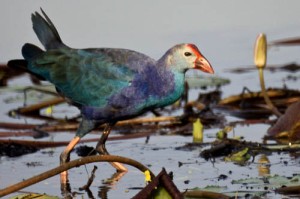
Purple Moorhen at Randarda Lake, Rajkot, Gujarat, India

He said that Randarda Lake has supporting natural eco – system with shallow water which provide suitable environment for birds. Moreover, there is a nursery managed by forest department adjoining the lake that provides good tree cover where birds can roost. Some of the bird species that can be seen there include black tailed god-wit, rosy pastor, pheasant tailed jacana, purple moor hen, pigeon, common teal, pelican and spoon bill.
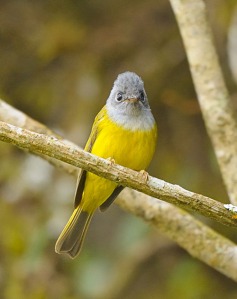
Canary Bird at Randarda Lake, Rajkot, Gujarat, India


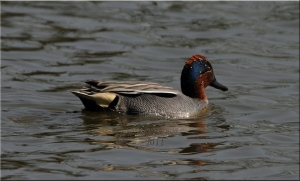
Common Teal at Randarda Lake, Rajkot, Gujarat, India
Courtesy:- Times of India

Thursday, August 30, 2012

Lions pressured by fodder shortage


Gujarat foresters are dealing with a new threat to the Gir wildlife Sanctuary. Scarcity of fodder on the periphery of the sanctuary is forcing politicians to pressure the forest department to permit Maldharis to bring their cattle inside the sanctuary for grazing.
Forest officials said that MLAs from the ruling party were trying to ensure that the Maldhari community around the sanctuary was allowed into Gir, Girnar, and Mitiyala sanctuaries. Sources said the pressure was constant.
This being an election year, officers are in a fix as members of the two main political parties want local inhabitants to illegally enter the area.
Bhagvan Bharwad, the MLA from Talala, said: “We will wait till Sunday and if there is no rain, we will make representations to the state government and even write to chief minister to permit grazing in the forest.” Bharwad said grass was not available and one could not let animal’s ir for want of food. “If the forest department or the state government refuses to give us permission, we will enter the forest without permission” he said. “Let them take action”.
A forest official said that in the recent past, a couple of attempts were made to enter the forest but guards prevented people from venturing deep into the sanctuary.
The sanctuary is closed for public for four months during monsoon, from June 15. Forest officials said that during this period the danger of lion attack was high. If Maldharis were permitted to enter the forest with cattle, risk to their lives would be immense.
Forest officials said that Maldharis were illegally allowing their cattle to graze in areas near the boundary of the sanctuary. “This is the park season for breeding for not just big cats, but even for the herbivores,” a forest official said. “The newborn of the herbivores learn to walk. At such a time, if cattle are permitted to graze in the sanctuary, they could be a nuisance to the newborn.

Thursday, August 23, 2012

Birding in Bhutan

Bhutan is enormously rich in bird diversity. Of the 675 species recorded, 78% are resident and breeding, 7% are passage migrant, 8% are winter visitor, 6% are uncertain and 1% fall in the data deficient category; 27% show elevational migrations.

BirdWatching
 Bhutan has two critically endangered (white-bellied heron Ardea insignis is white rumped vulture), one endangered, 12 vulnerable (black-necked crane Grus nigricollis, rufous-necked hornbill Aceros nipalensis, chestnut-breasted partridge Arborophila mandellii, Pallas’s fish eagle Haliaeetus leucoryphus, beautiful nuthatch Sitta Formosa, wood snipe Gallinago nemoricola, Blyth’s tragopan Tragopan blythii, greater spotted eagle Aquila clanga, Imperial eagle Aquila heliaca, Baer’s pochard Aythya baeri, Hodgson’s bushcat Saxicola insignis, dark-rumped swift Apus acuticauda, and grey-crowned prinia Prinia cinereocapilla), 11 near-threatened, and 11 restricted range bird species (Blyth’s tragopan Tragopan blythii, chestnut-breasted partridge Arborophila mandellii, dark-rumped swift Apus acuticauda, ward’s trogon Harpactes wardi, rufous-throated wren babbler Spelaeornis caudatus, hoary-throated barwing Actinodura nipalensis, brown-throated fulvetta Alcippe ludlowi, white-naped yuhina Yuhina bakeri, yellow-vented warbler Phylloscopus cantator, and broad-billed warbler Tickellia hodgsoni) as per IUCN 2003.

On a global scale, the country is recognized as forming a part of several globally important bird regions. It is a part of the Sino-Himalayan mountain forests, Indo-Burmese forests, Indo-Gangetic grasslands, South Asian arid habitats, and Tibetan plateau wetlands – all categorized as globally important bird regions by BirdLife International.’

For Birding Trips Contact:- 00-91-281-246523

Monday, August 20, 2012

500 Artificial Ponds to be filled for thirsty Lions


Junagadh district has received only 10 per cent of the rain it normally gets, forcing the forest department to put in place its contingency plan to ensure that lions’ thirst is quenched.

The forest department has to keep replenishing more than 500 artificial waterholes in the Gir National Park and its periphery. However, the department is worried because there are no such arrangements for lion zones in Amreli, Bhavnagar and coastal areas.

Foresters said that due to deficient rainfall this year, water levels in rivers, ponds, and wells are plunging. The Gir Forest National Park and Wildlife Sanctuary, also known as Sasan Gir, is the only abode of the Asiatic lions- their current population is 411. Other animals in the sanctuary include Leopards, Spotted Deer, Nilgais, Wild Boars, and thousands of bird species and various reptiles.

In the normal course, forest authorities stop filling the artificial waterholes in and around Gir by June 15 every year- unless it is required in summer. But nearly after a decade, the authorities are being forced to fill these ponds in August. The water holes are filled twice a day.

Chief Conservator of forests R.L. Meena said that the main worry is that the waterholes filled using wind and solar power will be rendered useless because the water level is falling drastically. The department may have to provide supply to these waterholes too. “A water tanker of the forest department is making eight to ten trips a day,” he said.

Senior officials said that with natural water getting exhausted, the forest department will have to get water from distant places. The department may have to call in more tankers to meet the demand. 

The water situation deteriorated when seven rivers – Hiran, Saraswati, Machhundri, Ghodavdi, and Raval- passing through the sanctuary started drying up.

Principal secretary S.K. Nanda had visited the sanctuary earlier this month to assess the situation.

Tuesday, August 7, 2012

Gujarat is India’s Lesser Florican Capital


Gujarat has the highest number of Lesser Floricans in the country. A recently published study of the Wildlife Institute of India reveals that Lesser Floricans in the northwestern region of the country were sighted only in Gujarat, Rajasthan, and Madhya Pradesh. And Gujarat recorded the most sightings, 54; in Rajasthan, 18 were sighted; and 12 in Madhya Pradesh.

During the study— carried out by G.S. Bhardwaj, K Sivakumar and Dr Y V Jhala —84 Lesser Floricans in all were sighted during the breeding season of 2010. However, the number was 65% lower than the figure reported in 1999.

The team surveyed 91 grasslands, which included the grasslands studied in 1999. Lesser Floricans were found in only 24 grasslands as against 37 in 1999.

Indeed, all is not well with the Lesser Florican population there has been a fall of about 62 per cent in sightings in Gujarat since 1999. That year, according to the report, there were 141 Lesser Floricans in Gujarat, 63 in Madhya Pradesh, and 34 in Rajasthan.

The population and habitat of Lesser Floricans in western India have been continuously declining at an alarming rate. The study states that most of the grasslands belonging to state forest departments in that part of the country were either pure grasslands or mosaic grasslands. The latter are saline patches. The study revealed that over 68 per cent of the birds were seen in the grasslands 35 per cent in pure grasslands and the rest in the mosaic grasslands.

Several grasslands have degraded due to grazing, or been planted with trees that make them unfit for Lesser Floricans.

Recommendations

Avoidance of tree plantation
It is important to have a National Policy on Grasslands Management in India. The practice of tree plantation by the forest department or by other agencies in grasslands should be avoided. Moreover, current practice of taking grasslands as source of only fodder for cattle needs to be reconsidered.

Inclusion of more Florican habitats in existing wildlife protected area network
Less than five protected areas exist exclusively for conservation of Floricans in north western India. Less than 5% of globally endangered Lesser Florican habitat is protected by Wildlife (Protection) Act, 1972. It is imperative that some grassland in Naliya region is included in the protected area network. Similarly, grasslands in Rajkot district as well as in Ratlam and Dhar districts of Madhya Pradesh should also be included.


Management of invasive species
Eradication of gando baval and other invading tree species from the selected grasslands in the north-western India should be taken up on a war footing.

Dangers that threaten to clip birds’ wings

Lack of national policy on grassland management in India
Due to inadequate grassland conservation policy, people assume grasslands as wastelands or pasture. These areas have been extensively planted with trees species including ‘gando baval’ (Prosopis Juliflora). Several grasslands in the regions have been converted into either woodlands or fields.

Invasive species
Invasion of gando baval was reported in several grasslands in the north western India. Apart from gando baval, several other tree species were also observed invading the grasslands largely due to grazing. Grazing of cattle expedites the spread of invasive species.

Rampant pollution
Lesser Florican is an omnivorous species. Foods of Florican include many types of invertebrates, and various plant parts along with grass hoppers, beetles, flying ants, hairy caterpillars, centipedes, worms, frogs, small lizards, crop shoots, leaves, herbs and berries. Insects form a large part of their diet. It shows that the Floricans prefer areas near the agriculture farm largely due to better availability of food. Intensive cultivation using rampant pesticides is a challenge to remaining population of Floricans.


Courtesy:- Times Of India


Saturday, July 21, 2012

Barda Dungar to have lions by December


Barda Dungar, the area which was declared a sanctuary in February 1979, will hear the roar of lions soon. After the monsoon or at latest by December this year, this part of Gujarat will get its own pride of Asiatic lions.

Chief Conservator of Forests R.L. Meena said that if everything goes to plan, lions will populate Barda in Porbandar District. Barely 15 km from the coast near Porbandar town, the hill forest of Barda stands as a bulwark against salinity ingress in the region. This area was declared a sanctuary in February 1979. It has a forest area of 192.31 sq.km, which is relatively small.

Barda has long been identified as a possible new home for lions and the forest department expects eight lions to make their new home there. Officials said that there was a delay in lions moving to Barda Dungar because of the delay in building up a sufficient prey base in the area.

The sanctuary has sizable populations of leopards, hyena, wild boar, wolf, jackal, blue bull, chital, sambhar among other species. Officials said that prey base has reached sufficient levels for the re-introduction of lions.

Officials said in the event of an out break of disease or a natural disaster, the existence of the entire Asiatic Lion population could be at risk. “We will have an alternative site in place in such an eventuality,” the officer said. Adding that the department has allowed the lions to wander out of Gir naturally. This year by October we are expecting a group of lions to move there,” said the forest officer.


Lions drive leopards away from their kills


The king of the jungle turned plunderer. Lions of the Gir chase leopards away from their kills. A recent incident bore testimony to this phenomenon. A lioness browbeat a leopard away from its kills of a chital and feasted on it along with her three cubs in Dedakdi area.

In this incident reported earlier this week, the lioness got attracted to the kill much after the leopard killed chital and started eating it. A beat guard who witnessed this incident said that as the smell of the flesh wafted, it drew the lioness and her cubs. Seeing the lioness approach, the leopard beat a retreat and climbed up a near by hill.

“The lioness and the club finished off the kill within a half-an-hour and left the area. The leopard kept staring at the remains, said Sandep Kumar, deputy conservator of Forest, Sasan.

Kumar said this was not an isolated incident. “About 25-30 per cent of the kill by leopard was snatched away by the lions. A detail study about the food habits of the lions has revealed that there were more incidents of this kind this year compared to the past,” he said.

Such incidents occur usually when lioness are roaming with their cubs in search of food. Those lions that are not in pride and are leading isolated lives also resort to such practice.

Leopards who lead solitary life easily fall prey to lions’ plundering. However, there have been also instances of role reversal when leopards tried to steal lions’ prey. But these attempts usually result in calamity recently; a leopard was killed by a pride of lions when it tried to steal their kill.

Foresters claim that there have also been some rarest of the rare instances where leopards have been successful in driving the lions away from their kills. Leopards generally target hyenas to snatch away their kills, said the forest officials.


Friday, June 15, 2012

Avian Wonder: Birds Conduct Survey before nesing


It is not just human beings who usually undertake a survey before launching a new venture. Even birds are known to carry out survey before finding a nesting place for themselves.

A flock migratory Asian bird has already begun a survey in and around Kankaria lake. The survey is a part of their nesting activity at Kamala Nehru Zoo, popularly known as Kankaria Zoo.

Over 2000 Migratory birds, including Spoonbill, White Ibis, Little Cormorant, Night Heron and Cattle Egrets, have been coming to the zoo for nesting. “Over 2000 birds come to the zoo for nesting. This year, these birds have already begun their initial activities”, said R.K. Sahu, zoo superintendent.

“Before the birds finally come to the zoo for nesting, a group of 10-15 birds comes to the area and carries out the survey about the availability of food and water in the lake. Once this group is satisfies with the facilities, it goes back only to return with a larger group of suck birds”.

According to Sahu, the area is best suited for nesting because of the greenery and a lake with good fish. The water is also suitable for these birds.

The nesting season begins by June 15 and continues till October and November. Birds like Cattle Egret, Little Cormorant and Night Heron come to the zoo by June 15; others like Spoonbill and Ibis come in July. Officials said that two species of Cattle Egret come to the zoo for nesting.

Each bird gives birth to three to four baby birds and at the end of the season, the number of birds at Kankaria becomes around 10,000. These birds come to the zoo from nearby states as the water level in the lakes there goes down drastically. When they come, the birds also use the old nests which were left behind the previous season.

Brief Profile of some Winged guests


Cattle Egret

The Cattle Egret (Bubulcus ibis) a species from heron found in the tropics, subtropics and warm temperate zones. These birds are originally native to parts of Asia, Africa and Europe. This species maintains a special relationship with cattle, which extends to other large grazing mammals. The cattle Egret removes ticks and fillies from cattle and consumes them. The breeding season various within South Asia. Nesting in Northern India begins with the onset of Monsoon. The breeding season in Australia is November to early January.


Spoonbill

Spoonbills are a group of large, long-legged wading birds in the family. Spoonbills generally prefer fresh water to salty but are found in both environments. They feed for many hours each day. The male gathers nesting material, mostly sticks and reeds, sometimes taken from an old nest, the female weaves it into a large, shallow bowl or platform which varies in its shape and structural integrity according to species. They female lays a clutch of about three smooth, oval, white eggs and both parents incubate.


Night Heron

Adult Night Heron are shot-necked, short-legged and stout herons with a primarily brown or grey plumage and in most, a black crown. Young birds are brown, flecked with white. Night Herons nest alone or in colonies on platforms of sticks in a group of trees; or on the ground in protected locations such as islands or reed-beds. About three to eight eggs are laid. They primarily eat small fish, crustaceans, frogs, aquatic insects, and small mammals. During the day they rest in trees or bushes.


Little Cormorant

The Little Cormorant (Phalacrocorax Niger) is small as compared to other cormorants. The bird is 55 cm in length with an average mass of 442.5 grams. It is a resident species in most of tropical South Asia, commonly found in Bangladesh, Bhutan, Cambodia, China, India, Indonesia, Lao People’s Democratic Republic, Malaysia, Myanmar, Nepal, Pakistan, Sri Lanka, Thailand and Vietnam; additionally, it is a vagrant species in Afghanistan. These birds nest in colonies, typically located in trees near a water body.


Saturday, April 28, 2012

The Royal Hunt

A 17- year old tigress hunts a buffalo calf at the Ranthambore National Park in Rajasthan's Sawai Madhopur District on Tuesday. Courtesy:- Times Of India

Saturday, April 14, 2012

White-rumped vulture found dead

A juvenile oriental white-rumped vulture was found dead at Junagam near Hazira, some 27kms from Surat in South Gujarat, on Wednesday. Locals informed volunteers belonging to Nature Club(Surat) about the dead bird. This vulture species is protected under Schedule 1 category of Wildlife Protection Act. "It was a juvenile of oriental white-rumped vulture species. it was lying dead. We collected the bird from the spot and sent it to the forest department in Mahuva, Bhavnagar District, where the facility to keep dead birds exists," co-coordinator, Vultures' Conservation Program, Nature Club(Surat), Viral Prajapati said. The postmortem of the dead bird will be done at Pinjore to ascertain the cause of death. According to nature conservationists, three species of vulture endemic to South Asia- the oriental white-rumped vulture gyps Bengalensis, longbilled vulture gyps indices and slender-billed vulture gyps gastroenteritis- are at high risk of extinction. "It has been observed that oriental white-rumped vultures are usually found in the western region of south Gujarat. A small population of oriental white-rumped vulture and long billed vulture still survive in south Gujarat's coastal part near Hazira. There are about 45 oriental white-rumped vultures," Prajapati said. Use of veterinary drug diclofenac is responsible for bringing the three species of vulture's endemic to South Asia to the brink of extinction. The Government of India banned the drug in May 2006. Recently, the state government had said in the state assembly that there were only 1,065 vultures in Gujarat.

Courtesy:- Times Of India

Wednesday, March 21, 2012

Here mornings begin with chirping of house sparrows

Rajkot: House sparrows may have almost vanished from city homes, but Jasdan and near-by villages in Rajkot district begin with the sweet these little birds daily. Thanks to a dedicated campaign of a forest official in Hingolgadh, sparrows have started nesting in huge numbers near human habitats in Jasdan, Gondal and in the district. V.D. Bala, range forest officer, Hingolgadh Nature Education Sanctuary Launched Chakli no Malo (Sparrow’s nest) campaign in 2010 by distributing nests specially designed for these birds to maximum people possible. Over the last three years, Bala has distributed over 1.50 lakh artificial nests across the state, mainly in Saurashtra Region. He exhorted people to keep these nests at suitable places at their home and report to him whenever sparrows nest in it. Bala said once commonly seen flitting around the neighborhood; sparrows are in a real trouble and vanishing from the centre of many cities and rural areas. “Due to various disturbances, the population of this friendly bird has witnessed a free fall. Primary reasons behind this are non-availability of food (due to changing lifestyles), lack of nesting places in urban areas among others,” he added. Hitesh Patel, a resident of Gondal town, said, “I brought 2,000 such nests and distributed them in the town two years ago. Out 2,000 nests, sparrows nested in all most all the nests. Now, our morning begins with their chirping.” “The sparrows used to build their nests below tiled roofs of houses. With contemporary architecture making a clean sweep in cities, tiled roofs have become a thing of the past, and sparrows have lost their prospective nesting spots. But artificial nests are good options and we are hopeful that House Sparrow will be brought in urban areas too,” Bala said.
Courtesy:- Times Of India

Saturday, June 4, 2011

No hotels within 2 km of Gir Lion Sanctuary, Gujarat, India

Hoteliers eyeing business opportunities around Gir Sanctuary, Gujarat, India may not have many options left. The State Forest Department has banned such activities within the two- km radius of the sanctuary.

The department recently issued a notification restricting setting up any new hotel business in the two km periphery of the sanctuary. The decision is aimed at giving Asiatic Lions free access to the Sasan Gir Sanctuary and to project their natural corridor.

Forest officials said, however, those Hotels and Farmhouses which are already in the business would continue to do so. He said after the tourism department’s advertisement featuring Gujarat brand Ambassador Amithbh Bachan, there was a mad rush of the tourists to the sanctuary. Sensing opportunities, businessmen started buying land in the area. This forced the state forest department to come out with the regulation.

S.K. Nanda, Principal Secretary, Forest and Environment Department said the restriction on the Hotel Industry was only to give free excess to the Lions.

He said that the movement of the Lions was getting restricted because of the developments happening around the Sanctuary. Nanda said the Department has also asked existing hotel owners to have their flood lights placed in such a way that it would not affect the movement of Lions.


Coutesy :- The Times Of India.

Friday, March 11, 2011

17 species of se recorded at Marine Park


As many as 17 species of sea slugs were reported and recorded for the first time in India during a recent study by a team of scientists led by Dr Deepak Apte from the Bombay Natural History Society (BNHS) at five different locations in the Marine National Park, Jamnagar.

A total of 45 species of sea slugs — soft-bodied marine creature — were recorded. Of these, 35 were being recorded for the first time in Gujarat. “The new findings have added to the richness of marine biodiversity in this park. A total of 45 species belonging to 35 genera and 18 families of opisthobranchias were encountered during the survey conducted during 2009-10,” said R D Kamboj, Chief Conservator of Forests, Marine National Park.

The highest species richness was found at Poshitra; with 24 species whereas Narara recorded 14, Dwarka and Okha recorded nine and 10 respectively and the goose reef recorded six species of opisthobranchs.

These soft-bodied mollusks belong to the order opisthobranch of phylum mollusk of the animal kingdom. These are highly evolved gastropods having a single gill behind the heart and one pair each of oral tentacle and rhinophores. The members of this order include sea slugs, sacoglossans, sea hares and nudibranchs. They maybe herbivores, carnivores or omnivorous.

According to Dr. Apte, many more species can be recorded if a consortium of scientists works on the project. “It is important to record these species because often we don’t even know what we have lost,” he said.

Scientists say that these mollusks are highly sensitive to slltation due to dredging of ocean floors to construct jetties, ports and ship traffic in the marine ecosystem. Small confined populations like that of sakuraeolis gujaratica, an endemic species to Poshitra region, Gulf of Kutch, can even face extinction due to loss of Habitat.

“This is only a rapid assessment. Once the full surveys are done, species count is likely to increase manifold. Poshitra bay is also home to several rare species such as facelina lineata, lomanotus vermiformis and cuthona yamasui. Another species sakuracolis gujaratica is endemic to Gulf of Kutch and found only in Poshitra, There are only two known existing sites for this species at Okha and Poshitra,” Kamboj said.

During the study, scientists found that in view of the rich marine biodiversky of corals and molluscs in Poshitra bay, this area needs to be insulated against various degradation factors, particularly industrial and port development activities, which may spell doom for the last remaining good quality of corals and other rare marine fauna in Gulf of Kutch.

The Marine National Park in ,Jamnagar is spread over 161 sq km area and has major species like sponges, corals, jelly fish, sea horse, octopus, oyster, pearl oyster, starfish, lobster, dolphin, dugon and waterfowl among others.

Courtesy:- Times Of India, Wednesday, March 2nd, 2011.

Tuesday, December 7, 2010

Get up, close and personal with #Winged visitors


An on going exhibition in the city is aiming to create awareness among the local population regarding #migratory #birds, their habitat and way of life.

The exhibition is being organized by the forest department, with the help of the municipal corporation of Jamnagar, and is being held at the Town Hall. An interpretation centre has also been set up as part of the show, which got under way on November 28 and runs until December 5, The municipal corporation has Invited schools to attend the exhibition so that students can get first-hand information regarding various species of migratory birds that visit the area.

The Interpretation centre - is equipped with a state-of-the-art Interactive system which gives information about nesting, voices and food habits of the migratory birds. Students can interact with machines and can get in-depth information regarding the winged visitors. Even real-life models of birds and their habitat have been created at the exhibition.


Jamnagar’s costal area plays host to about 257 species of migratory birds. In Jamnagar district, 325 #bird species have been recorded in past, out of which 170 are migratory ones coming from North Europe and Siberia, while others include semi-migratory and local ones.

“The idea of the entire exercise is to make the present and the next generation aware about the rich bio-diversity of the district and create awareness among people regarding winged visitors which are an essential part of the entire ecosystem and the food chain. The exhibition will be open until December 5 for public,” said municipal commissioner
P Swaroop. Photographs of the birds and animals captured by local photographers are also displayed in the exhibition, he added.


Courtesy :- Times Of India, 4 December, 2010