Showing posts with label Madhya Pradesh. Show all posts

Saturday, September 15, 2012

Spoting Wild Tigers at Kanha National Park, Madhya Pradesh, India

In the quiet before dawn, a pale moon still lit the sky above Kanha's (Kanha National Park, Madhya Pradesh) entrance gate. A group of us — 4 Canadians (including Terry and his wife Andy) and I — were en route to Kanha Meadows, a section of the park where we were most likely to see tigers. Upon my inquiry about our chances of spotting a tiger, our forest guard Sadan Yadav replied, “Every minute in the park counts—it only takes a second to see a tiger, so Positive Thinking!” Five hours later, it was almost closing time and still no sign of a tiger. All of a sudden, 3 jeeps roared past us, drivers motioning ahead, ahead! We raced after them and joined the 5 or 6 jeeps parked near a meadow of tall grass.
“There are two cubs in that grass” whispered Yadav. I squinted at the spot but could see nothing. Yadav began to make sharp "tiger" calls. After 5 minutes – a reply!
 
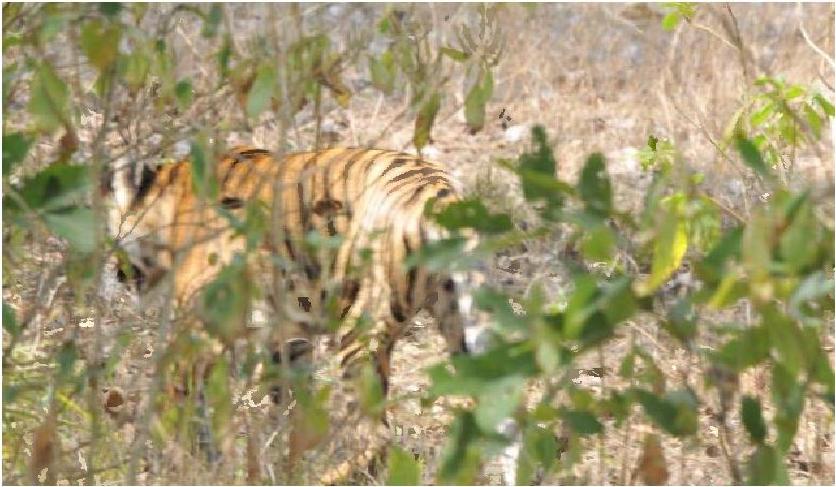
The grass parted magically and there it was — a 16- month old tiger cub!
 
“She thinks it's her mother calling and is replying.”
 
 
And then…another Call!! TWO tigers - the second cub still camouflaged in the grass (see if you can spot it in the left corner)
 
In a breathtaking moment, the cub (if that’s what you call an enormous 16-
month-old female tiger), walked purposefully out of the tall dry grass.
 
 
Sinews rippling gold, her sister dramatically followed her sibling.
 
 
They both vanished once more into the yellow and green grass. How an enormous cat can disappear in an instant (when common sense tells you that it’s still there), is one of nature’s great miracles. “See,” said Sadan Yadav, practically hopping with glee. “Positive Thinking.”
 

Tiger Update

Tiny cub abandoned by mother in Panna
  •  The end of the summer and the beginning of the monsoon always heralds the birth of new tiger cubs. Amidst the flurry of new litters, a female tigress recently abandoned its 20-day old male cub. This tiny youngster was rescued by a highly concerned forest department and revived in an air-conditioned room. It was highly dehydrated at the time of rescue, but we are happy to report that it is now doing well! Since it is being hand reared, however, it will sadly not be able to return to the wild.
 Prominent male tiger passes away in Bandhavgarh
  •  At the end of April, the dominant Bokha male was killed by his son in a ritual fight over territory in the park’s Magdhi zone. The cycle of life and death, however, is unending in the wild, and three females have had litters in the Tala zone, promising lots of action when the park re-opens in October. In June, our naturalists and guests were enchanted by sightings of the Jhurjhura female’s 2-month old cubs. It is extremely rare to see cubs this young, as tigresses tend to hide their cubs in thick undergrowth until they are older and less vulnerable.
 A handful of tigresses with cubs in Kanha
  • Kanha too promises plenty of action next season as a few females have just had litters. Once cubs are older, they start venturing out & there is a good chance of spotting them.

CLICK! Pugdundee Photo Album

Karan Rana shares a few photographs he took last season in Kanha National Park Madhya Pradesh
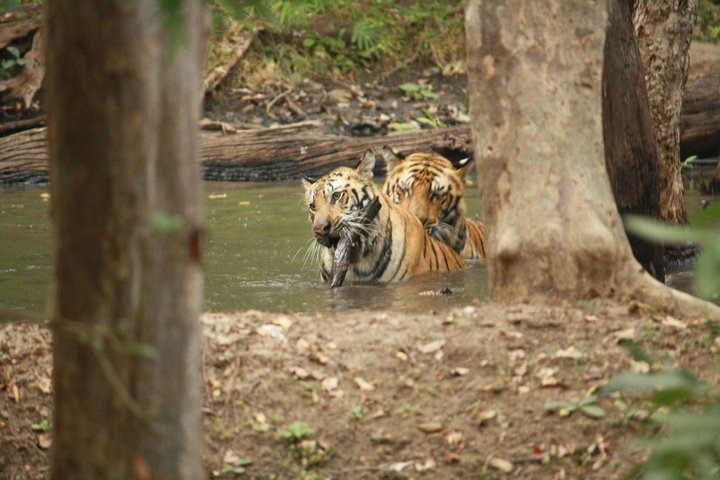
Below Two tigers cool off in a waterhole in Kanha – Photo courtesy of Karan Rana, March 2012

News Courtesy:- Pugdundee News

Friday, September 14, 2012

Birdwatchers Eye Candy at Kanha National Park, Madhya Pradesh, India


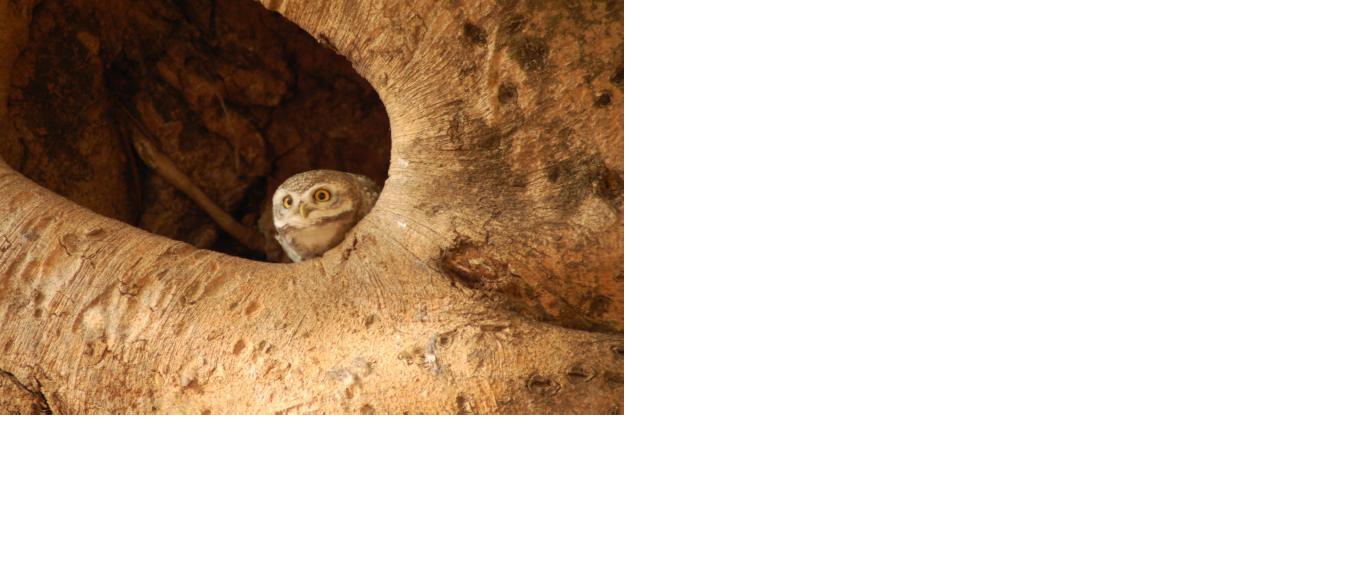
Jungle Owlet. This tiny Kanha (Kanha National Park, Madhya Pradesh) resident bravely stands sentinel at his daytime roost in a tree hollow near Kisli Gate. Keep your eyes peeled as you pass through the gates and you might spot him swaying sleepily in the breeze. Jungle Owlets have yellow irises, are 20 cm tall and roost in tree cavities. When disturbed, they freeze & pretend to be dead tree stumps!


Black Stork (Ciconia nigra) fishing in Kanha Meadows


Little Cormorant waits patiently for a catch
– Photos courtesy of Karan Rana

Kshitij Gambhir caught a few magic moments on camera last season in Bandhavgarh


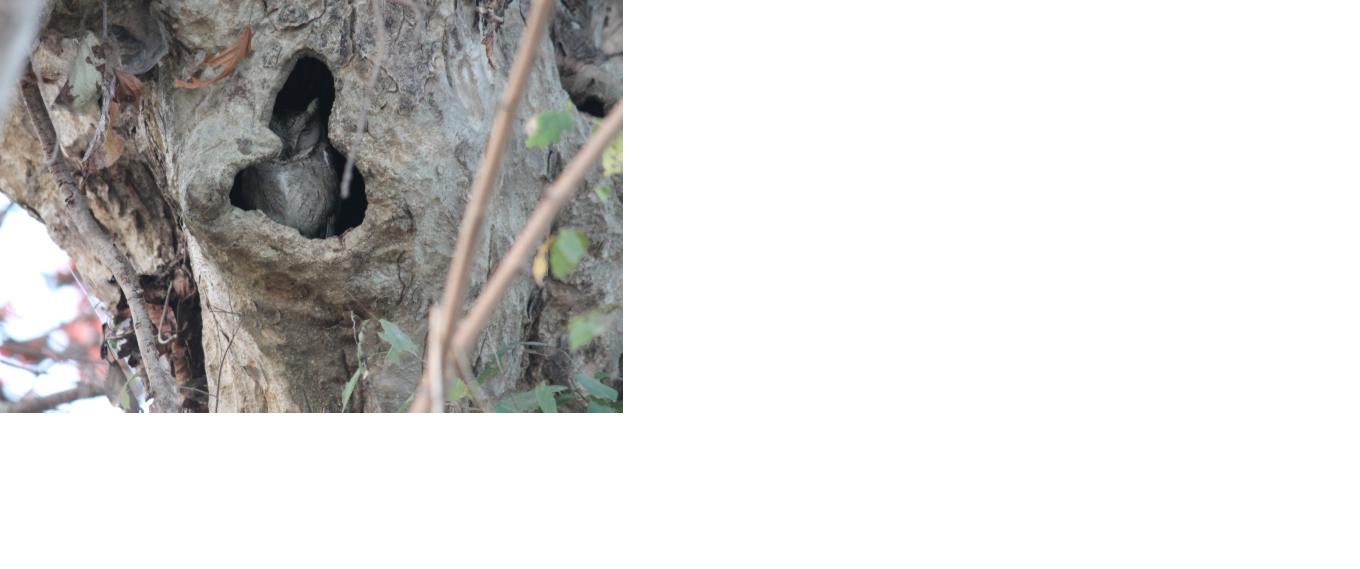
 Fast asleep – a Collared Scops Owl


Common Rose butterflies
 Photos by Kshitij Gambhir

News Courtesy:- Pugdundee News

Tuesday, August 7, 2012

Gujarat is India’s Lesser Florican Capital


Gujarat has the highest number of Lesser Floricans in the country. A recently published study of the Wildlife Institute of India reveals that Lesser Floricans in the northwestern region of the country were sighted only in Gujarat, Rajasthan, and Madhya Pradesh. And Gujarat recorded the most sightings, 54; in Rajasthan, 18 were sighted; and 12 in Madhya Pradesh.

During the study— carried out by G.S. Bhardwaj, K Sivakumar and Dr Y V Jhala —84 Lesser Floricans in all were sighted during the breeding season of 2010. However, the number was 65% lower than the figure reported in 1999.

The team surveyed 91 grasslands, which included the grasslands studied in 1999. Lesser Floricans were found in only 24 grasslands as against 37 in 1999.

Indeed, all is not well with the Lesser Florican population there has been a fall of about 62 per cent in sightings in Gujarat since 1999. That year, according to the report, there were 141 Lesser Floricans in Gujarat, 63 in Madhya Pradesh, and 34 in Rajasthan.

The population and habitat of Lesser Floricans in western India have been continuously declining at an alarming rate. The study states that most of the grasslands belonging to state forest departments in that part of the country were either pure grasslands or mosaic grasslands. The latter are saline patches. The study revealed that over 68 per cent of the birds were seen in the grasslands 35 per cent in pure grasslands and the rest in the mosaic grasslands.

Several grasslands have degraded due to grazing, or been planted with trees that make them unfit for Lesser Floricans.

Recommendations

Avoidance of tree plantation
It is important to have a National Policy on Grasslands Management in India. The practice of tree plantation by the forest department or by other agencies in grasslands should be avoided. Moreover, current practice of taking grasslands as source of only fodder for cattle needs to be reconsidered.

Inclusion of more Florican habitats in existing wildlife protected area network
Less than five protected areas exist exclusively for conservation of Floricans in north western India. Less than 5% of globally endangered Lesser Florican habitat is protected by Wildlife (Protection) Act, 1972. It is imperative that some grassland in Naliya region is included in the protected area network. Similarly, grasslands in Rajkot district as well as in Ratlam and Dhar districts of Madhya Pradesh should also be included.


Management of invasive species
Eradication of gando baval and other invading tree species from the selected grasslands in the north-western India should be taken up on a war footing.

Dangers that threaten to clip birds’ wings

Lack of national policy on grassland management in India
Due to inadequate grassland conservation policy, people assume grasslands as wastelands or pasture. These areas have been extensively planted with trees species including ‘gando baval’ (Prosopis Juliflora). Several grasslands in the regions have been converted into either woodlands or fields.

Invasive species
Invasion of gando baval was reported in several grasslands in the north western India. Apart from gando baval, several other tree species were also observed invading the grasslands largely due to grazing. Grazing of cattle expedites the spread of invasive species.

Rampant pollution
Lesser Florican is an omnivorous species. Foods of Florican include many types of invertebrates, and various plant parts along with grass hoppers, beetles, flying ants, hairy caterpillars, centipedes, worms, frogs, small lizards, crop shoots, leaves, herbs and berries. Insects form a large part of their diet. It shows that the Floricans prefer areas near the agriculture farm largely due to better availability of food. Intensive cultivation using rampant pesticides is a challenge to remaining population of Floricans.


Courtesy:- Times Of India