Showing posts with label Bird watching. Show all posts

Friday, August 15, 2014

Rare Masked Booby spotted near Mahuva ( Bhavnagar, Rajkot, Gujarat, India )

The bird is usually found in tropical zones

Manoj Sanghediya, a 23-year old amateur bird watcher from Datardi Village in Mahuva taluka of Bhavnagar District ( Rajkot, Gujarat, India ), could not identify the large seabird that had fallen in his farm on Saturday.
But he was quick to rescue the sick bird that was unable to fly and take it to Mahuva Town. An environment activist, he often rescues snakes in his village.
masked booby in Mahuva
The bird that he rescued was Masked Booby, a large bird found in tropical zones of theoceans.
“When the Masked Booby was brought on Saturday, it was sick and exhausted. We contacted, Dr. Nayan Patel, a veterinary doctor, who earlier worked with forest department in Mahuva advised us to give glucose to it. We tried to save the rare visitor but it died on Tuesday evening”, said a wildlife activist from Mahuva Chirag Koradiya.
Bird conservationists say that the Masked Booby may have been exhausted and landed in the coastal area in a sick condition. It nests on small tropical islands especially without forests. It breeds in central and western pacific as well as off Mexico.
According to experts, Masked Booby are spectacular divers that can plunge diagonally into the ocean at high speeds. They mainly eat small fish.
“This could be the third time that a Masked Booby was reported to be seen on the Saurashtra coast,” Koradiya said.
Courtesy - Times Of India 

Saturday, January 11, 2014

Ahmedabad has 160 bird species

The ornithologists as a part of the animal Bird Race event organized jointly by Natural Heritage Conservation Society ( NHCS ) – Gandhinagar and international bank identified only 160 bird species in and around Ahmedabad city. 
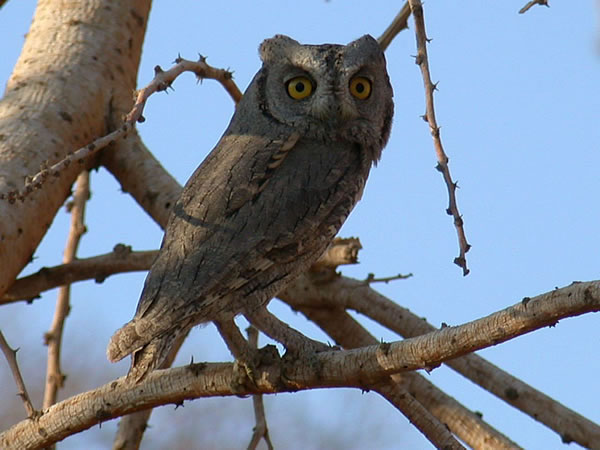
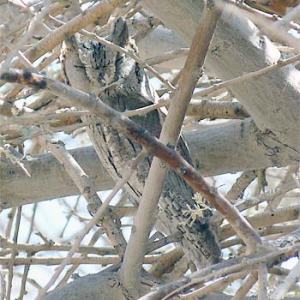
species-Otus-brucei-4
Last year the same even had identified over 260 bird species. This was the seventh time such an event was held in Ahmedabad in which around 140 participated in group of 40 teams. More than 160 species of bird were recorded during around the city.
Each team spent its entire day watching birds in and around Ahmedabad with their own tally of species. Earlier bird races in Ahmedabad have recorded more than 260 species of birds. These teams moved around at a critical point on the avifaunal migration route, and flanked by a vast landscape of open habitats, from agricultural tracts to semi –arid landscapes, inland wetlands and secondary growth, and area with human population.
storks There were no pre – determined routes to the Bird Race – participants observed the birds at multiple locations all within 30 – 40 km radius of the city. According to Virag Vya, a research coordinator NHCS, Ecologists Irshad Theba and Bharat Jethva during the race the team identified rare species which included White Stork, Short – eared Owl, Red Avadavat ( Red Munia ), Booted eagle were sighted by different teams.
The coordinators said that the programme helped to create awareness and conservation ethos among the citizens. The participants were also sensitized towards the bird injuries during Uttarayan.
Courtesy:- Times Of India

Monday, December 9, 2013

4th Global Bird Watchers' Conference from January 31, 2014

The 4th Global Bird Watchers' Conference, the annual event of Gujarat tourism department in coordination with forest department will be held for three days, from January 31.
To put water bodies in the state on the international map and attract tourists, Gujarat Tourism Department in association with various organization began this event in 2009-10 and it has become a regular event.
Officials said Gujarat is emerging as an eco-tourism destination; being host to wide range of pristine and hitherto unexplored destinations for nature lovers. The conference will not only showcase the destinations of Gujarat; but discussions will also be held on how to preserve these winged visitors who are facing many threats.
Officials said the objectives of the fourth conference were to promote Gujarat as a birding destination and project it as a eco-tourism destination. The conference aims to provide a platform for discussion by international experts on birds, birding and bird watching to promote tourism and conversation.
Also, the conference will discuss on the migratory route of birds from Europe and West Asia to the coasts, wetlands and islands in Gujarat. Officials said, that this time, the focus is likely to be Nal-Sarovar and nearby areas as the water body was recently declared a Ramsar site.
For Details contact, 00-91-281-2465237 || 00-91-281-2483878

Thursday, July 18, 2013

48 lesser floricans counted at Black Buck National Park

Velavadar Grassland is an Ideal Habitat for their Breeding

The forest department has counted 48 lesser floricans, the critically endangered smallest bustards od the world. In Velavadar Blackbuck National Park (BNP) in Bhavnagar district. The counting was done on Saturday and Sunday.

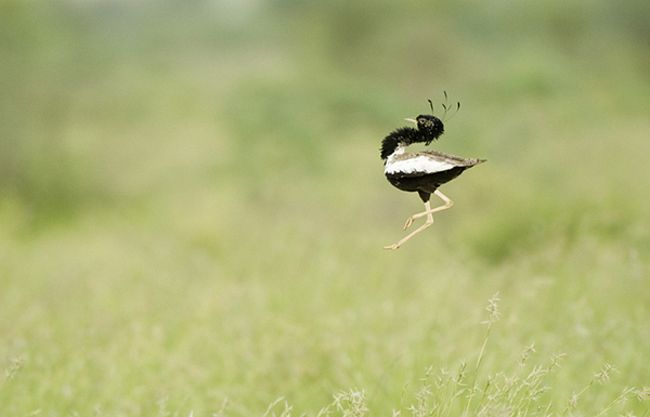
lesser_florican_display5722a
According to assistant conservator of forests, BNP, D.P. Baghela, of the 48, 44 were males and four were females. Forest officials said BNP is the only grassland in north western Indian that has observed a steady population of lesser florican. Last year, 54 were counted here.
“This year we first spotted lesser floricans in first week of July. This grassland provides an ideal habitat for lesser floricans for breeding during monsoon and started leaving before winter,” Vaghela added.
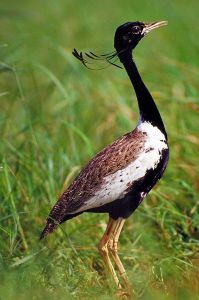
florican1

Lesser florican is endemic to the Indian subcontinent and list under Schedule 1 species under the Indian Wildlife (Protection) Act, 1972.

“Degradation of grasslands in Gondal, Rajkot and Jamnagar earlier attracted lesser floricans. But they are seldom seemed here. Velavadar National Park is the only grassland in north western Indian where floricans are reported in good number, largely due to better grassland management and protection,” he said.Forest officials said earlier, lesser floricans were found in many parts of the region, but now these birds are found at very few places in the state.

Two years ago, researcher G.S. Bharadwaj of Wildlife Institute of India (WII) carried out a study on lesser floricans from across the country. They study observed that most of the potential florican habitat in the state were converted into cotton fields where large quantities of pesticides are being used, the greatest threat to floricans here.

“Lesser florican is best known for the leaping breeding displays by males during the monsoon,” an official said.


Courtesy:- Times Of India. 

Friday, July 5, 2013

Sarus cranes flock to Dantiwada Dam(Banaskantha, Gujarat, India)

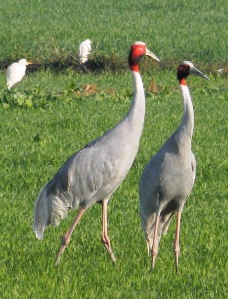
A large number of Sarus crane have flocked to Dantiwada dam site these days much to the delight of bird lovers.

Sarus Pair 003
“I was surprised to see a large numbers of beautiful cranes in the shallow water,” a professor in local R.R. Mehta Science College Dr. Suresh Prajapati said. He added that is was pleasure to see around 70 cranes feeding on fishes.

He said the dam located about 30 km from Palanpur in Banaskantha district (Gujarat, India) is an arid place and these cranes rarely come to such a place.

“In all we counted 73 adult cranes. It indicates that no breeding had taken place here and all had migrated from some other place,” assistant conservator of forests at Banaskantha N.M. Bhatol said. He said, “These birds are placed under a threatened category. It is great to spot them here in the arid land. Millet fields with shallow waters and generation of awareness to some extent has led to these birds arriving here”.

Prajapati pointed that in 2010 he had spotted hardly 10 birds at the site. A bird lover Nirdosh Gupta said Sarus cranes are spotted during pre-monsoon season when the dams having meager water in their shallow bottom are ideal place for picking fishes.

Courtesy:- Times Of India

Sunday, May 12, 2013

WORTH Flocking to Thol (Ahmadabad, Gujarat, India)

Paris of Sarus crane beckon bird-lovers.

If you thought, Thol (Ahmadabad, Gujarat, India) was only about migratory birds, another visit to this lake is due!. Flocks of majestic Sarus cranes have descended in the lake and near - by fields. there are at least 50 Sarus cranes here. No wonder then that bird watchers and shutterbugs are flocking to Thol (Ahmadabad, Gujarat, India) these days, braving the blistering heat.


Courtesy:- Times of India


Watch towers to deter poachers


Nalsarovar (Ahmadabad, Gujarat) also gets allocation for information network

Now on, the watchful eyes of foresters will be trained on the winged visitors from overseas that flock to Nalsarovar (Ahmadabad, Gujarat) every year. The state forest department has decided to set up watchtowers near the bank of three villages where poachers has been rampant. Officials have also decided to allocate special funds to set up an information network for Nalsarovar, a Ramsar site.


Official in Nalsarovar said that at meetings between senior officials on Monday, it was decided to have watchtowers in three sensitive villages – Darji, Ranagadh and Vekariya (Gujarat). These have sizeable population and notorious for the poaching of birds. In all, about 9000 people in these villages hunt and eat wild animals.

The meeting was held after two people from Ranagadh Village (Gujarat) were caught with 60 coots that had been trapper and whose legs and wings were broken to keep them from escaping.

These watchtowers will be equipped with closed circuit cameras and in order to prevent damage, one hidden camera will also be installed to catch poachers who will manage to find the visible ones.

Sources in the department said that against the sanctioned strength of 12, there are just six staffers – including the deputy conservator of forests and assistant conservator of forests. With just half the sanctioned strength, officials have to keep watch over 1.5 lakh winged visitors and thousands of tourists to the wetland spread over 120.82 sq km.

“There are only three guards to secure the highly sensitive site, which has communities known for poaching living nearby”, said a source. It was decided at the meeting that staff strength would be increased to ensure illegal activities are monitored efficiently. 

Courtesy:- Times Of India.

Monday, May 6, 2013

Vulture count on a rise thanks to Asiatic Lions


Vulture population may be on a decline across Gujarat but the number of these fast diminishing scavengers has surprisingly risen in Bhanvnagar (Gujarat, India) and Amreli districts (Gujarat, India). Interestingly, it is the lions that are helping these endangered birds make this region their permanent habitat.

The number of vultures in the 70-km coastal stretch from Mahua-Rajula-Nageshree (Gujarat, India) has steadily increased from an all time low of 87 in 2010 to 134 in 2013. In fact, the extremely rare Eurasian Griffon specie of vultures that were only winter visitors of Mahuva, are now seen throughout the year.  

vul8

Besides serious conservation efforts and people’s awareness, wildlife experts also attribute the increase to the presence of large number of lions in the revenue land in this region. Vultures feast on the animals that have been preyed upon by lions.

“Since these lions are out of forests area, they mostly kill domestic cattle and feed on them in open fields. Moreover, these animals are untreated and not administered Diclofenac, which is the sole reason for vulture’s decline. This helps vultures to have a healthy food chain, a critical aspect for their survival,” said Ruchi Dave, honorary wildlife warden, Bhavnagar district (Gujarat, India).

Recently, wildlife enthusiasts spotted 25 endangered vultures including two Eurasian Griffons, feedin on the carcass left behind by an Asiatic Lion near Rajula in Amreli District (Gujarat, India).

“Few days ago mi spotted eight vultures feasting on an animal killed by Lions. Such a sight is quite common now”. Said Jasubhai Mobh, a Maldhari living in Mobh Nesh near Khambha.

Lions are in good numbers in Mahuva, Rajula, Khambha, Jafrabad and Savarkundla (Gujarat, India) area and most of them are out of protected forest area. “There are over 75 lions in his 70 km area and most of them are in revenue area. We have often seen vultures eating the lion’s kill in these areas,” said Vipul Laheri, honorary wildlife warden, Amreli (Gujarat, India).

Notably, Bombay Natural History Society (BNHS) has selected the Mahuva area as one of the six provisional Vultures’ safe Zone on the country.

Lions’ presence in this ‘vulture’ zone has helped these birds stay put. “Eurasian Griffon vultures have been observed throughout the year, which indicated that this area is non-disturbed habitat for vultures,” Dave said. 

Courtesy:- Times of India. 


Saturday, February 16, 2013

Great Indian Bustard (GIB) census starts in Rajasthan, India

The state level winter census of the Great Indian Bustard (GIB) started from February 10th in the state. The GIB is a bird which is on the verge of extinction.

Chief forest conservator, wildlife, Jodhpur, (Rajasthan, India) Govind Sagar Bhardwaj, has been appointed the nodal officer for the census. Only 100 Great Indian Bustard (GIB) is alive in the country and nearly 50 of them are in Jaisalmer(Rajasthan, India).

A workshop for the census was organized at a Hotel in Jaisalmer (Rajasthan, India) on Friday, in which six forest divisions, voluntary organizations and army jawans participated.


Deputy conservator of forests, ML Sonal informed the participants about the wildlife census. State wildlife board, Jaipur, Rajasthan, India member Rajpal Singh was the guest of honor.

Information about the preparations for the census, deputy forest conservator Karan Singh said that this time the transit lines have been increased and five new tracks have been laid outside the Desert National Park. A control room has been set up at the wildlife office. The team constituted for census work will be provided with a wireless set, head set, GPS, binoculars, etc. the census will be carried out on the scheduled track on camels and on foot.


Deputy forest conservator, Desert national Park, GK Verma, regional forest officer Pankaj Gupta, assistant forest conservator Rewat Singh Godara and regional forest officers also took part in the workshop. Assistant forest conservator (wildlife) VK Bissa, who conducted the workshop, gave a vote of thanks.

During December last year, a Great Indian Bustard (GIB) was poached; bit till date there is no clue of the poachers. Human interference is responsible for the diminishing numbers of these birds as it prevents the shy bird from breeding.

The state government and the center appear indifferent towards saving the bird. Although, a plan for GIB conservation has been sent to the center, but no action has been taken so far.

Courtesy:- Times Of India (Monday, 11th, February, 2013)

Saturday, December 8, 2012

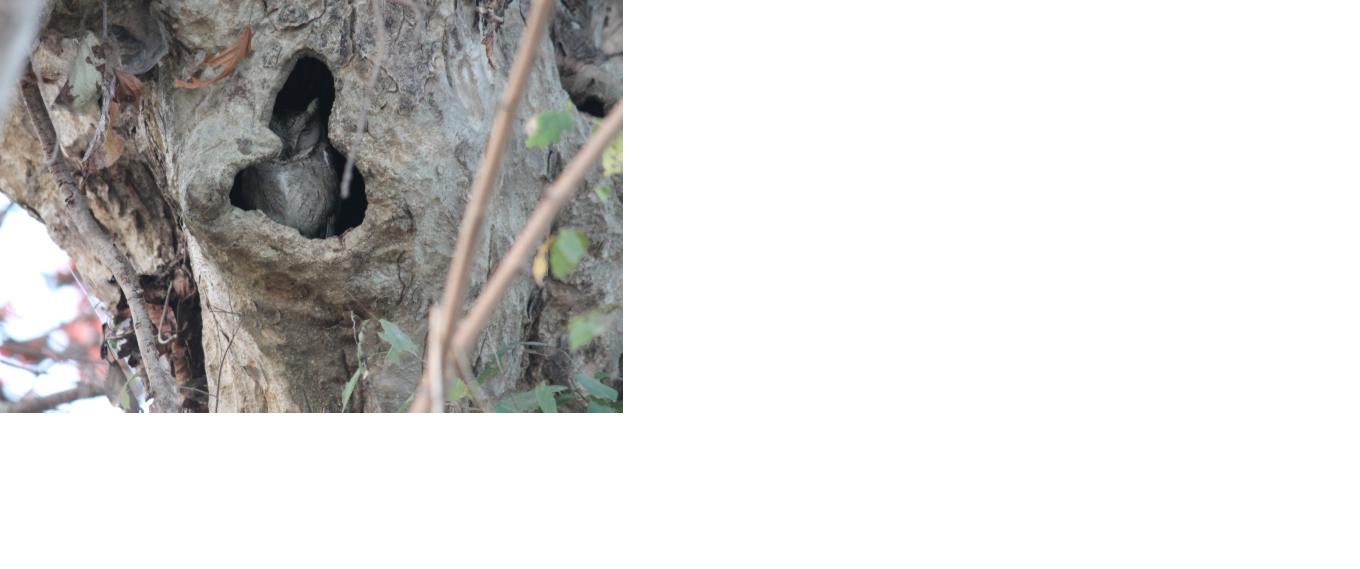
Rare owl spotted in Little Rann(Gujarat, India), bird watchers thrilled

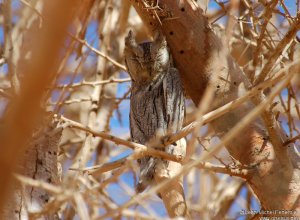
Sighting of rare species of owl here, for the fifth year in a row, has left avian aficionados thrilled. Bird watchers in the city claim that the Pallid Scops Owl (Otus Brucie) which has been spotted at Zainabad(Gujarat, India), about 95 km from the city, during this time of the year for past five years is the same bird. Dhanraj Malik, the owner of Desert Courses who first spotted the bird and posted its pictures, said, "When the bird was again spotted in 2009, we weren't sure weather it was the same bird. I took pictures of the bird from every angle and posted it on internet. Bird watchers from across the world confirmed that it was the same bird which had visited the spot the previous year."
species-Otus-brucei-4
This is the fifth year when the bird has been spotted in Zainabad(Gujarat, India). Malik said, "The bird has arrived a tab bit late than its usual schedule. But that is normal considering the changes in climate. To ensure that the bird feels at 'home', we ensure no pesticides are ever used near the spot that it usually occupies. The owl also has a favorite tree here, so we ensure that not a single branch of the tree is chopped.

The owl makes nest on the tree till end of February. Malik said that birds have an in built GPS(Global Positioning System) system that helps them find their way back to the same place, like this Pallid Scops Owl.
pallid-scops-owl
Wildlife photographer from Banglore Shreeram MV has visited Zainabad(Gujarat, India) thrice in the past four years just to photograh this rare owl. Shreeram said, "The first time I saw it, I was in awe. Since then I have returned every year to spot the owl. This is a very rare bird and I don't want to miss the opportunity to photograph it. This year too, I will be visiting with a team of photographers at the end of the winter to click photographs of the owl".
Birders from across the world are already booking their dates to see the bird. Malik said," There was a researcher from New York who had done her PhD on Pallid Scops Owl but had never seen it. This year she saw the bird for the first time."
Petit-duc de Bruce Otus brucei Pallid Scops Owl
Manisha Rajput, a bird lover and a wildlife tour operator, said, "The migratory pattern of the bird is that of a passage migrant which means that it takes more or less the same channel every year. This is an endangered species and spotting it is a big moment for the bird watchers. So many foreign tourists have booked tours because they want to catch a glimpse of this owl".
Says Manish Vaidya, a Wildlife activist, " Not only does the bird follow the same route, it also choses the same spot to make a nest and migrates at the same time every year".

Courtesy:- Times Of India

Friday, September 14, 2012

Birdwatchers Eye Candy at Kanha National Park, Madhya Pradesh, India


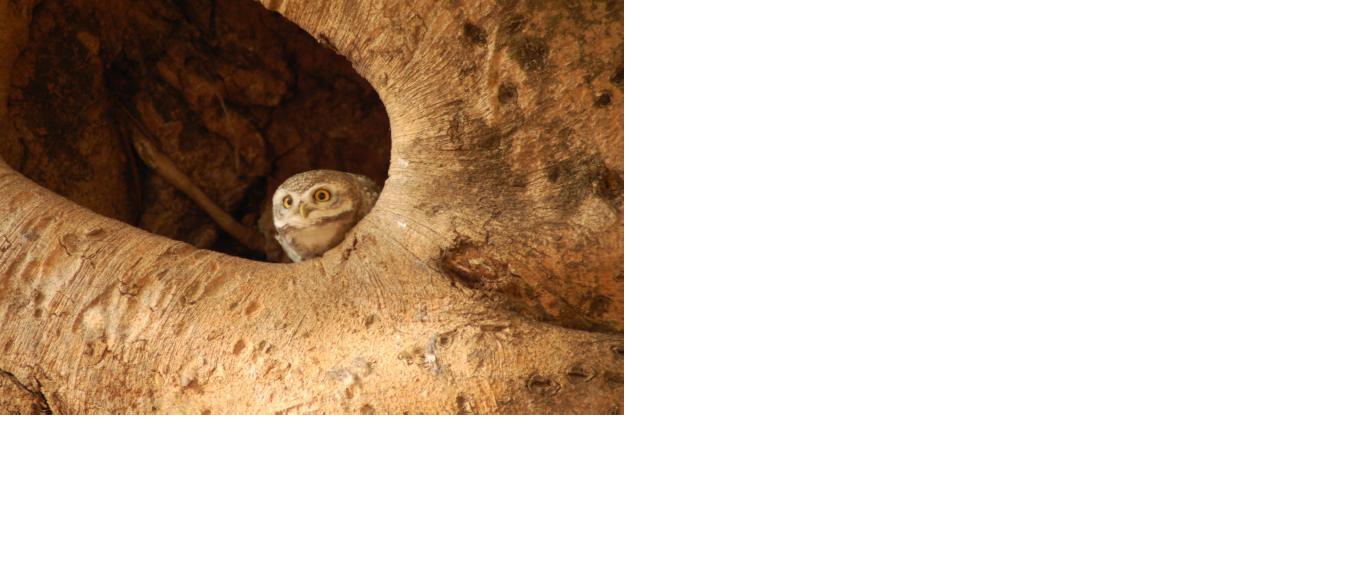
Jungle Owlet. This tiny Kanha (Kanha National Park, Madhya Pradesh) resident bravely stands sentinel at his daytime roost in a tree hollow near Kisli Gate. Keep your eyes peeled as you pass through the gates and you might spot him swaying sleepily in the breeze. Jungle Owlets have yellow irises, are 20 cm tall and roost in tree cavities. When disturbed, they freeze & pretend to be dead tree stumps!


Black Stork (Ciconia nigra) fishing in Kanha Meadows


Little Cormorant waits patiently for a catch
– Photos courtesy of Karan Rana

Kshitij Gambhir caught a few magic moments on camera last season in Bandhavgarh


 Fast asleep – a Collared Scops Owl


Common Rose butterflies
 Photos by Kshitij Gambhir

News Courtesy:- Pugdundee News