Showing posts with label Times Of India. Show all posts

Saturday, March 30, 2013

For Saurashtrians(Gujarat, India), “lions are like kin”


The people of Saurashtra(Gujarat, India) take care of lions as they would of their family members. If they spot a lion iIMG_3668n the vicinity of their village, they take pride in the fact and protect it. These statements were made by the government in the assembly for the first time.

Minister of state for forests and environment Govind Patel – in response to a question from Nikol MLA Jagdish Panchal – informed the house that lions were found in many places of India, but they survive only in Gujarat owing to people’s conservation efforts.

“They are the pride of Gujarat and it was only because of the people of Saurashtra that the lion population grew,” Patel said.

“Even if lions attack cattle in villages, the villagers are tolerant of lions”.
Patel told the house that government has also created post of ‘van mitras’ who take care of the animal and keep a watch on the movement inside the sanctuary. He said 898 eco-clubs had been formed in the Saurashtra region.

Responding to a question Patel said that there were 411 lions – 97 males and 162 females – in the sanctuary. He further said that the state had created gene – pool centers. Five new cubs have been born in the last year at the Rampara Virdi centre. These cubs have been born to two pairs of lions captured from completely different areas and brought to Rampara to ensure that the genes different. These centre’s provide a shield against weakening genes of Gir Lions.

For example if the lioness was from Sasan (Gujarat, India), the lion would be from a far off area of Tulsishyam(Jungadh, Gujarat, India) or even Bhavnagar. The minister said that there have been no instances of villagers offering baits to lions in order to show the animals to visitors. However, he admitted that his department had penalized people caught on the spot to the tune of Rs. 93,000 to Rs 31,400.

Courtesy: Times of India.   

Friday, March 29, 2013

Of 92 lion deaths in last two years, 83 were natural


No incident of poaching: Government

A total of 92 lions have died in the last two years in Saurashtra region (Gujarat, India). Of these, 83 died natural deaths while the remaining nine died of accidental causes, like falling into open wells.

Minister of state forest and environmental Govind Patel told the House in a written reply to Lathi MLA Bhavku Unghad’s question. The government said that said that 46 lions each died in the year 2011 and 2012. The minister said that among the dead cats were 43 cubs, 20 males, while the rest were females.
The minister said that there was no incident of poaching in the any part of the state. He added that in 2011 five lions lost like in different kinds of incidents, while the number was four in 2012.

The death of 46 animals was normal as only 11 per cent of the animals are dying annually. The officer said that also there was a drop over the past few years in the number of accidental deaths. The forest department has begun a drive to cover up wells in and around Gir Forest (Gujarat, India). However, such incidents of death due to falling in a well were reported in the areas far away from the sanctuary.

The official added that of one looked at the figure more cubs have died recently. A study by Dr. V. Meena of the Wildlife Institute of India titled “Reproductive Strategy and Behavior of Male Asiatic Lions” revealed that survival rate of cubs was lowest in the first year of birth and gradually increases in second and third year, he added.

Courtesy: - Times Of India

Can Indian geneticists revive Asiatic cheetah?

A few days ago, when scientists inched closer to reviving an Australian frog species that has been extinct for the last 30 years, they also revived the world’s fascination for De-extinction – a concept that walks the thin line between science fiction and reality. Bringing to life species that have been wiped off the face of earth is a dream many geneticists have pursued for years.

“If India were to aggressively pursue it, there are at least three extinct species that can get a shot at coming back for the dead” says Sandeep Sharma of the Washington based Smithsonian Conservation Biology Institute.

“High on the list is the Asiatic Cheetah that went extinction in India soon after Independence. The others are the pink-headed duck and the maintain quail. There are a few pre-historic species, too, but then it might get too ambitious.”

Indian geneticists have been attempting to clone the Asiatic Cheetah – a favorite animal of the Mughal emperor Akbar who reportedly has an army of 1000 cheetahs accompany him on his hunting expeditions. But efforts to recreate the majestic predator have encountered several roadblocks. “The biggest hurdle is procuring the cell-line of the cheetah and defining protocols for somatic cell transfer. Once this happens, we have a realistic chance of reviving the cheetah in India,” says S Shivaji of the Center for Cellular and Molecular Biology (CCMB), Hydrabad.

Somatic cell transfer involves creating a clone embryo with a donor nucleus in a laboratory and is considered as the first step in reproductive cloning. India has recently imported a few cheetahs whose cell lines, says Shivaji, CCMB is trying to get. After that, it would be a case of attempting again and again – success rates in reproductive cloning are just about 5% till an Asiatic cheetah cub is born.

Asiatic-Cheetah-by-Ghoddousi-HRNobody knows when this might happen. “We are still not sure what factors combine together to create the 5% success rate,” says Shivaji.

De-extinction itself is a subject that has drawn diverse opinions. Those opposing it says that is a species went extinct over a period of time – Darwin’s theory of survival of the fittest propounds this is nature’s way of balancing itself – is it prudent to re-introduce it in an ecosystem where some other species may have taken over it role? Ulhas Karanth of Wildlife Conservation Society says it makes no sense at all. “De-extinction is unlikely to work because factors that caused the original extinction continue to operate”.

However, De-extinction proponents continue to be gung-ho about its prospects. “It should not be an either/or question,” says Ryan Phelan, executive director of Us NGO Revive & Restore which recently organized a much publicized conference on the subject along with National Geographic and TED. “It’s really an all one continuum. What’s good for extinct species will be great for endangered ones”.

If man does succeed in playing god, it might just be Jurassic Park all over again, hopefully minus the horror.

Courtesy: - Times of India.

Tuesday, February 12, 2013

Decline rate of vultures in India slows


Vultures may not be the most pleasant birds to contemplate, given their not so pleasant appearance and association with death, but they serve a vital role in an Eco - system by eating dead fish.
vultures
Throughout India, vulture populations have plummeted to less than one percent of what they were a few decades age, leading to an epidemic of unseen cattle carcasses and spawning an increase in the number of rats, feral dogs and human rabies cases for dog bites.
But they may be some hope for these much maligned birds: Their decline had slowed, stopped or even reversed in some areas of the Indian Subcontinent, according to a paper published on February 7th in the journal Science.

The birds declined largely because ranchers started giving their cattle an anti inflammatory drug called diclofenac that the birds ingested when they ate the dead cattle, paper author and Cambridge researcher Andrew Balmford said. In 2006, following revelations that diclofenac was deadly to the birds, the government of India, Pakistan and Nepal banned the use of the drug for cattle.

Bangladesh followed in 2010, and in May 2012 the four governments reached an ‘unprecedented political agreement’ to prevent unintentional poisoning of the vultures from veterinary drugs, Balmford told OurAmazingPlanet.
images (1)


Many ranchers have adopted an alternative drug that is safe to vultures, Balmford said, but the increase of other drugs in concerning, especially one that’s close in structure to diclofenac, Balmford said. Restrictions on these drugs are needed, he added.

Nevertheless, vulture numbers have leveled off in many areas, and increase elsewhere.


Courtesy:- Times Of India

Thursday, December 6, 2012

Randarda Lake(Rajkot, Gujarat, India) gets wings

Sunset At Randada Lake, Rajkot, Gujarat, India.
Sunset At Randarda Lake, Rajkot, Gujarat, India.

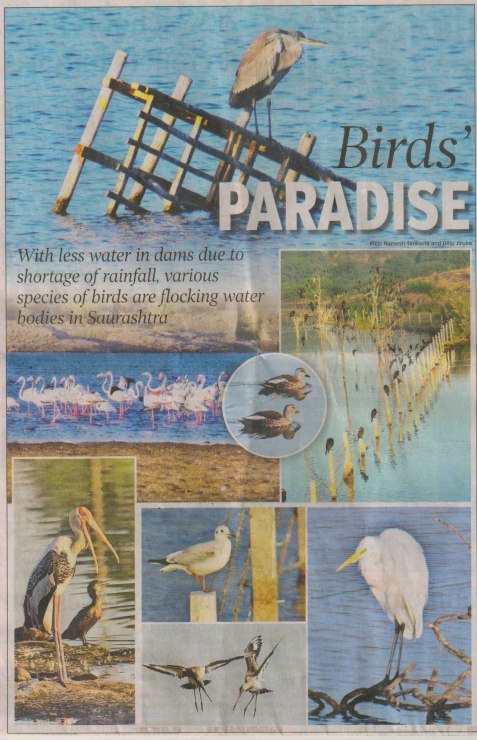
Randarda Lake has turned into a bird watchers paradise with a large number of migratory birds arriving at the water body. The 100 year old lake is home to many indigenous birds also.

The natural lake with shallow water is located near Rajkot Municipal Corporation’s (RMC’s) Pradhyuman Park Zoo. According to ardent bird watcher Ashol Mashru, “This Lake is home to about 167 bird species which include 15 species of ducks and eight of eight of fly catcher. As many as 60 species of migratory birds can be spotted here”.
 
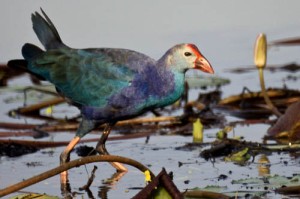
Purple Moorhen at Randarda Lake, Rajkot, Gujarat, India

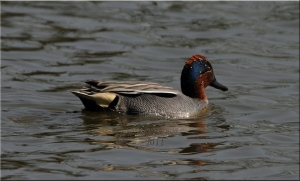
He said that Randarda Lake has supporting natural eco – system with shallow water which provide suitable environment for birds. Moreover, there is a nursery managed by forest department adjoining the lake that provides good tree cover where birds can roost. Some of the bird species that can be seen there include black tailed god-wit, rosy pastor, pheasant tailed jacana, purple moor hen, pigeon, common teal, pelican and spoon bill.
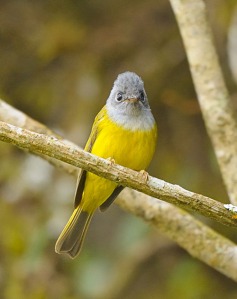
Canary Bird at Randarda Lake, Rajkot, Gujarat, India


Common Teal at Randarda Lake, Rajkot, Gujarat, India
Courtesy:- Times of India

Monday, September 3, 2012

Birds of A Feather

A week end hangout at Thol lake, roughly 40 km from Ahemdabad(connected to all major Indian Cities equipped with International Aiport daily flights from Delhi and Mumbai), always rejuvenating. Recently water levels in this lake spread over 700 hectares have risen to 6.9 feet due to release of Narmada waters. As a result, nearly 150 flamingos have moved away to distance where water are shallow. However, two pairs of Sarus Crane make a treat for the eyes as they stand tall amid lush green grass. They have also laid eggs there. At present, there are 100 spoon bills, 1,000 coots, 1500 cormorants besides other waders. TOI(Times of India) lensman Amrit Mewada captured some winged beauties.

Here are some Photos


Courtesy:- Times of India

Saturday, April 28, 2012

The Royal Hunt

A 17- year old tigress hunts a buffalo calf at the Ranthambore National Park in Rajasthan's Sawai Madhopur District on Tuesday. Courtesy:- Times Of India

Saturday, April 14, 2012

White-rumped vulture found dead

A juvenile oriental white-rumped vulture was found dead at Junagam near Hazira, some 27kms from Surat in South Gujarat, on Wednesday. Locals informed volunteers belonging to Nature Club(Surat) about the dead bird. This vulture species is protected under Schedule 1 category of Wildlife Protection Act. "It was a juvenile of oriental white-rumped vulture species. it was lying dead. We collected the bird from the spot and sent it to the forest department in Mahuva, Bhavnagar District, where the facility to keep dead birds exists," co-coordinator, Vultures' Conservation Program, Nature Club(Surat), Viral Prajapati said. The postmortem of the dead bird will be done at Pinjore to ascertain the cause of death. According to nature conservationists, three species of vulture endemic to South Asia- the oriental white-rumped vulture gyps Bengalensis, longbilled vulture gyps indices and slender-billed vulture gyps gastroenteritis- are at high risk of extinction. "It has been observed that oriental white-rumped vultures are usually found in the western region of south Gujarat. A small population of oriental white-rumped vulture and long billed vulture still survive in south Gujarat's coastal part near Hazira. There are about 45 oriental white-rumped vultures," Prajapati said. Use of veterinary drug diclofenac is responsible for bringing the three species of vulture's endemic to South Asia to the brink of extinction. The Government of India banned the drug in May 2006. Recently, the state government had said in the state assembly that there were only 1,065 vultures in Gujarat.

Courtesy:- Times Of India

Thursday, April 5, 2012

Online dash to save the vanishing Sparrow

If you have been missing the once- familiar chirping of sparrows around your house, here’s your choice to contribute to finding out why this common bird seems to have disappeared from cities across India. A Two-month long online surveys called Citizen Sparrow was launched on Sunday, inviting responses from people on questions such as when they last sighted the bird and details about the area they live in. The survey can be taken at www.citizensparrow.in. “It is an elementary step to gather information. We are encouraging people to report their experience, be it a drastic drop in sparrow count or a sudden spurt. These inputs will give us valuable leads to compile pan-India data”, Suhel Quader, evolutionary ecologists at National Centre for Biological Sciences. The environment ministry-funded survey is being undertaken by the Natural History Society, with the help of 10 partner organizations such as Indian Bird Conservation Network and Nature Conservation Foundation. The disappearance of the house sparrows so widespread till recently that the Chinese Communist Party declared it a pest in1958 and asked people to exterminate it remains a great modern mystery worldwide. In the UK, sparrows are estimated to have declined from over 12 million to 6 million since the mid-70s. While in Europe the decline has been documented and studied, there has been no major study in India so far. Bombay Natural History Society (BNHS) seeks to change that with its current initiative. “The survey would give is the first baseline data about distribution of sparrows in the country. This would form the basis for further research,” said Kathik K, project coordinator. The objective of moving ordinary citizens rather than experts comes with a purpose. “Almost everyone knows about sparrows. It is an attempt to reach out to people, asking them to share their stories and their understanding of these birds”, said Quader. Participants in the survey would be asked to mark locations on a map and give information about their sparrow sightings, including sightings from the last year and even earlier. Such information will enable a comparison of sparrows in different places, and this is expected to point to particular threats or problems. The findings are intended to feed detailed studies investing causes of decline and potential measures for the recovery of sparrow populations. Asad Rahmani, director, Bombay Natural History Society (BNHS) said, “The sparrow is an indicator of a trend. A number of other birds have also declined sharply in the past few decades. We hope the survey would provide more clues about why these birds are disappearing”. Courtesy:- Times Of India

Tuesday, April 3, 2012

Black- Necked stork numbers up in Khijadia Bird Sanctuary, Jamnagar, Gujarat, India

Forest Department officials claim to have spotted 49 black-necked storks in and around Khijadia Bird Sanctuary roughly 12km from Jamnagar in the recent statewide water birds’ census.
It is a significant increase from merely six storks (including two chicks) spotted in 2002 of the 49 black-necked storks, seven were chicks, officials said. Black-Necked storks are classified as “near threatened” in India.
“In the last decade, rare birds like black-necked storks have preferred the environs of Khijadia for breeding and their numbers have increased significantly” said R.D. Kamboj, Chief Conservator of Forests, Marine National Park, Jamnagar.
Kamboj said the birds’ population estimation in and around Khijadia was carried out in the last week of January 2012, when many winter visiting birds were expected.
The number of birds as well the species has increased in Khijadia over the last four years. “During the estimation exercise, a total of 87,681 birds of 185 species were recorded at the sanctuary in the 2008 census, 41,437birds belonging to 119 species were recorded,” Kamboj said.
However, Jaypalsinh Jadeja, an avid bird watcher and ornithologist, said that the population of black-necked storks is not limited to just Khijadia or the area surrounding it but are spread over an area stretching up to Dwarka, which is roughly 150 km from Jamnagar.
“It is a magnificent bird to watch and you will definitely find at least four to five black- necked storks at Khijadiya within one km range,” said Jadeja.
Khijadia Bird Sanctuary is a wetland area located on the southern coast of the Gulf of Kutch in semi-arid region of Jamnagar district. It encompasses freshwater lakes as well as brackish/marine wetland at a place. This complex of wet lands strategically falls on Indo-Asian flyway of migratory birds welcoming the birds coming from Iran, Afghanistan, and Pakistan and their neighboring areas.
“The sanctuary also has birds like painted storks, darters, lesser flamingoes and Indian skimmers among others. The sanctuary has been proposed recently for inclusion as the wetland of international importance, a Ramsar site”, kamboj said.
Courtesy:- Times Of India

Thursday, March 29, 2012

Photography of bustard now covered under Wildlife Act

The forest department has restricted the movement of people in the Naliya grasslands, a habitat of the Great Indian Bustard. This is because the movement of people was too close to the birds and created disturbance for them. Deputy conservator of forests, #Kutch (West) division, P.A. Vihol said that recently the Ministry of Environment and Forests (MoEF) issued guidelines for the #Great #Indian #Bustard Recovery Programme. The guidelines stated that “unethical photography during the breeding season often acts as a constant source of disturbance to the bustards. Incidents of such photography have been reported in Naliya grasslands. Due to the lack of legislative enforcement and protective measures in core breeding areas, such direct threats on Great Indian Bustard population continue unrestricted.” Vihol said, “In order to reduce such direct threats to this critically endangered and #Schedule-I species in NaIiya grasslands, particularly during their breeding season, we are issuing a caution note to the over- enthusiastic and unethical photographers to restrict their movements near the sanctuary areas, breeding and nesting grounds. The breeding season spans from April to October.” He cautioned that “any person found to be disturbing the birds during their breeding or even its nesting shall be prosecuted under the #Wildlife #Protection #Act 1972.” According to officials, the act was there in place, but no such caution was issued and people use to walk very close to the birds. Hence, a decision was taken to impose this caution note based on the guidelines of the MoEF. It has been mentioned in the guidelines that some grassland areas were ploughed during monsoon and post-monsoon season for planting better species of grass and their growth. Such activities also create disturbance to nests, eggs or chicks of the Great Indian Bustard, said a senior official, adding that the department will also impose a curb on such activities.
Courtesy:- Times Of India.

Wednesday, March 21, 2012

Here mornings begin with chirping of house sparrows

Rajkot: House sparrows may have almost vanished from city homes, but Jasdan and near-by villages in Rajkot district begin with the sweet these little birds daily. Thanks to a dedicated campaign of a forest official in Hingolgadh, sparrows have started nesting in huge numbers near human habitats in Jasdan, Gondal and in the district. V.D. Bala, range forest officer, Hingolgadh Nature Education Sanctuary Launched Chakli no Malo (Sparrow’s nest) campaign in 2010 by distributing nests specially designed for these birds to maximum people possible. Over the last three years, Bala has distributed over 1.50 lakh artificial nests across the state, mainly in Saurashtra Region. He exhorted people to keep these nests at suitable places at their home and report to him whenever sparrows nest in it. Bala said once commonly seen flitting around the neighborhood; sparrows are in a real trouble and vanishing from the centre of many cities and rural areas. “Due to various disturbances, the population of this friendly bird has witnessed a free fall. Primary reasons behind this are non-availability of food (due to changing lifestyles), lack of nesting places in urban areas among others,” he added. Hitesh Patel, a resident of Gondal town, said, “I brought 2,000 such nests and distributed them in the town two years ago. Out 2,000 nests, sparrows nested in all most all the nests. Now, our morning begins with their chirping.” “The sparrows used to build their nests below tiled roofs of houses. With contemporary architecture making a clean sweep in cities, tiled roofs have become a thing of the past, and sparrows have lost their prospective nesting spots. But artificial nests are good options and we are hopeful that House Sparrow will be brought in urban areas too,” Bala said.
Courtesy:- Times Of India

Sunday, January 15, 2012

Workshop on Nalsarovar wetland bio diversity, ecology

Environment experts from across the country and state will get together on Tuesday to discuss the ecosystem of Nalsarovar which is among the largest lakes in the state. Every year, over two lakh winged visitors visit this lake situated on the outskirts of the city. A one-day workshop has been organized by the forest department and the Gujarat Ecological Education and Research (GEER), which will focus on landscape and wetland ecology. According to forest department officials, experts and scientists from Bombay Natural History Society, World Wide Fund for Nature-India, Salim All Center for Ornithology and Natural History, Coimbatore and Space Application Centre, Ahmadabad, among others, will take part in the workshop. GEER officials said that Nalsarovar has a well-known eco-system where large number of winter birds congregates. “Over the period of time, many individuals as well as institutes have explored various aspects of Nalsarovar including geology, hydrology, flora and fauna, dynamics of blo-diversity, socio-economic and various other factors affecting the ecology of Nalsarovar,” said GEER (Gujarat Ecological Education and Research) officials. Officials believe that it is necessary to aggregate scientific information to analyze It and incorporate the same for the management of this lake which is an important site for the migratory winged visitors that will be an aim of this workshop, Apart from the scientists and experts, bird watchers from Ahmadabad and all over the state will also be a part of the one-day workshop. Courtesy:- Times Of India.

Tuesday, December 20, 2011

Gujarat slips on wetlands recognition Pakistan gets honored on environmental front

Pakistan has scored over Gujarat on the environment front. Even though Pakistan has just 10% compared to Kutch’s about 12,000 sq kilometers area that attracts migratory birds, the neighboring country already has an international recognition for the same. Pakistan part of the desert had got the tag of Ramsar site, way back in 2002. Gujarat, on the other hand, is yet to send a recommendation for the 90% of the Rann. An official in the forest department said the Kutch area easily qualifies for Ramsar recognition. He said that the Convention on Wetlands (Ramsar, Iran, 1971) is an intergovernmental treaty that embodies the commitments of its member countries to maintain the ecological character of their wetlands of international importance and to plan sustainable use. However, the state forest department has not even recommended Kutch to be notified as Ramsar site. The official said that Ramsar tag would ensure international recognition to the area, Also the site gets a commitment from the government to preserve the ecological balance. In addition, government agencies, non-governmental organizations, and groups of citizens at all levels of the communities, including at international stage, also undertake actions aimed at raising public awareness of wetland values and benefits in general, and the Ramsar Convention in particular. While attaching Ramsar recognition to Runn of Notch in Pakistan in the year 2002, it was announced that this area was integral with .the large Rann of Kutch across the frontier with India. The Runn of Kutch in Pakistan has locally and globally threatened species; including the Great Indian Bustard, Hauberk Bustard, Sarus Crane, and Hyena and also population of greater and lesser flamingos- The site does not have more than one lakh birds visiting the area. On the contrary, over 10 lakh migratory birds flock the Indian parts of the Rann like Khadir and flamingo city, This sanctuary, which is the largest in the state, encompasses a true saline desert where thousands of Flamingoes nest and breed in the world-famous ‘Flamingo City.’ Pelicans, black-necked storks, cormorant, Indian cormorant, Brahmini Duck, Pintail, Spotbill, Shoveller, Pochard, Sandpiper, Gulls, Terns, Tints and plovers also throng the area. An ornithologist Bharat Jethwa says, “This is an extremely important area as it also a breeding site. The site if it gets Ramsar recognition, it would be protected by international laws and global attention would be drawn on every measure taken for the conservation.” He said that the officials should immediately take it up and recommend this site for a Ramsar label. Additional principal’s chief conservator of forest H S Singh said, “Gujarat always has maintained that there should be less penetration to outsiders.” “If a site gets Ramsar recognition there would much foreign interference in terms of researchers and hence Gujarat, and for the matter Centre too, was not keen on Ramsar recognition’ Singh added. He stated that countries like Pakistan and Bangladesh eye such tags because they get international funds for conservation, which is not the case with the Indian sites. Courtesy:- Times Of India.

Monday, December 19, 2011

Former MP joins drive to save flamingos

Former BJP Member of Parliament from Kutch Pushpadan Gadhvi has come forward to save the winged visitors from Siberia from the jaws of death. Over 400 flamingos had died after colliding with high tension cables in the Khadir region in Kutch. Gadhvi is a trustee of a trust working to create awareness on saving birds, animals and even Gauchar land. Gadhvi who visited Khadir region said, “We need to take care of our winged visitors from dying in such large numbers.” The birds had died after they collided with the high tension transmission cables of Gujarat Energy Transmission Company (GETCO). GETCO had begun taking corrective measures after The Times of India reported on the death of scores of these birds along a recently electrified cable line. Gadhvi said after the completion of the Kutch Rann Utsav, which begins on December 9, he will invite expert bird watchers from the area and even the experts from the Bombay Natural History Society to deliberate on the issue of the death of birds after collision with high tension cables. “If the experts give an opinion that laying the cables underground was the best option, I would take the BJP party office bearers into confidence and talk to the minister of state for energy Saurabh Patel on laying cables underground.” He said the forest department team has taken some measures like having cellophane papers and reflectors installed along the high tension wires, which is proving to be effective. Also the department has installed light along the poles. He said that an awareness campaign will be organized to ensure that the birds were not poached or killed. Officials in the forest department said, “With the water receding, the birds are moving away from cables.” Courtesy:- Times Of India.

Saturday, December 3, 2011

Large flocks make Kutch birdwatchers’ delight

The Khadir area in Kutch this season has seen a large number of migratory avifauna owing to good rains this season. “Usually, there are 30,000 to 40,000 birds gathering at Khadir, but this time because of the good rams in the region, there was water and hence the migratory birds have come in large numbers. Availability of food and protective environment has also added to the increase,” said the officer. Chief Conservator of Forest D.K. Sharma said, “Lakhs of birds have arrived in Greater Rann of Kutch wetland this year Ornithologists and amateur bird watchers are excited about the flamingoes and many other rare birds in Khadir. More than two lakh flamingoes, 10,000 pelicans, 7,000 gulls, 5,000 black winged stilt, and reef herons, painted and white storks as well as Casper and river terns - all were spotted in Khadir area,” he said. Sharma said “We feel the number of birds that have arrived in Kutch this year would break all records of past years.” He said that the forest department is taking all safety measures and keeping a regular vigil by tracking the movements of the birds. Courtesy:- Times of India.

Night flying deadly for Flamingos

Winged visitors crash into cables as they fly migration routes in dark

For some winged visitors a journey of over 2,000 km from Siberia comes to a deadly end just when they swoop in to land in the shallow waters of Kutch. Electric wires char their feathers and even result in death. This phenomenon has been documented in a study ‘Flamingo mortality due to collision with high tension electric wires in Gujarat by Anika Tere, now with MS University and B M Parasarya of Agriculture University Anand. The study published in the last week of November2011, revealed that the flamingoes who are known to fly at night and in low light collide with the near invisible overhead wires because of the negligible reaction time to make evasive maneuvers. The study also concluded that freshly dead flamingos were found in the morning hours suggesting that these overhead wires are not visible at night and in the dark hours of late evenings or early morning. The study also points out that along the international border, the presence of the electrified barbed wire fence and the electricity lines powering the fence as well as villages on the frontiers make formidable obstructions to the birds. The study takes note of a soldier’s narration of how flamingos get trapped in the electric fence on the international border. The study further reveals that compared to the large population of flamingos and other factors causing mortality the mortality caused by collision with high tension wires is low. The incidences of collision with utility structures in these parts of Gujarat have remained unnoticed. Flamingos visiting the Rann of Kutch during their breeding season are exposed to such wires only for a short period of the year however, at other feeding sites such as salt pans and the sewage ponds of urban areas like Bhavnagar and Jamnagar they continuously face the risk of collision as they spend more time there. Courtesy:- Times Of India.