Showing posts with label Bird Saving Campaign. Show all posts

Saturday, January 11, 2014

Ahmedabad has 160 bird species

The ornithologists as a part of the animal Bird Race event organized jointly by Natural Heritage Conservation Society ( NHCS ) – Gandhinagar and international bank identified only 160 bird species in and around Ahmedabad city. 
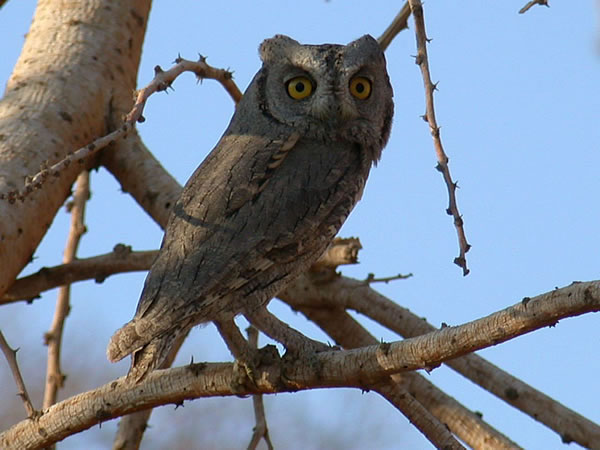
species-Otus-brucei-4
Last year the same even had identified over 260 bird species. This was the seventh time such an event was held in Ahmedabad in which around 140 participated in group of 40 teams. More than 160 species of bird were recorded during around the city.
Each team spent its entire day watching birds in and around Ahmedabad with their own tally of species. Earlier bird races in Ahmedabad have recorded more than 260 species of birds. These teams moved around at a critical point on the avifaunal migration route, and flanked by a vast landscape of open habitats, from agricultural tracts to semi –arid landscapes, inland wetlands and secondary growth, and area with human population.
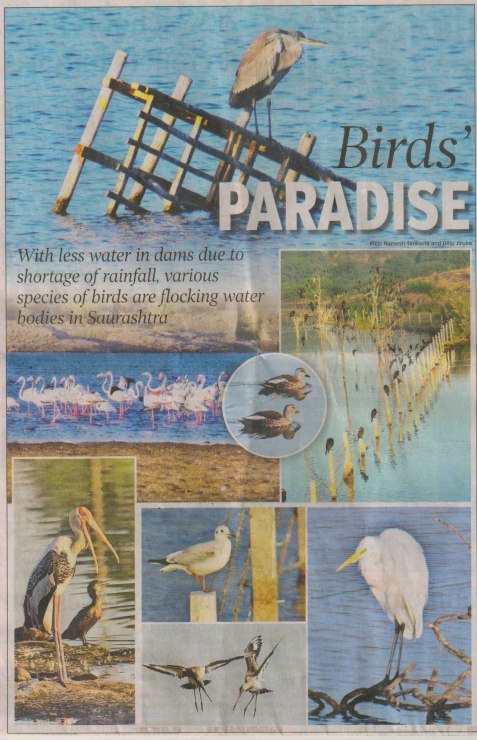
storks There were no pre – determined routes to the Bird Race – participants observed the birds at multiple locations all within 30 – 40 km radius of the city. According to Virag Vya, a research coordinator NHCS, Ecologists Irshad Theba and Bharat Jethva during the race the team identified rare species which included White Stork, Short – eared Owl, Red Avadavat ( Red Munia ), Booted eagle were sighted by different teams.
The coordinators said that the programme helped to create awareness and conservation ethos among the citizens. The participants were also sensitized towards the bird injuries during Uttarayan.
Courtesy:- Times Of India

Dholera ( Gujarat, India ) SIR ( Special Investment Region ): Campaign to save Bhal ( Bhavnagar, Gujarat, India ) ecology launched

Wildlife activities from Saurashtra opposing the proposed Dholera Special Investment Region ( DSIR ) project have undertaken a letter writing campaign, raising concerns about the threat propsed to the ecology and biodiversity of Bhal region.
Chill out for Bird Watchers
They are posting letters to top shots in Union environment ministry, Ahmedabad collector, officials of environment and forest department in Gujarat and prominent wildlife conservationists across Indian raising their concerns.
Last week, Gujarat Pollution Control Board ( GPCB ) and Ahmedabad district collectorate held a public hearing on environmental impact assessment on the proposed DSIR. The site for the proposed DSIR is a rural area of approximately 920 square kilometers, comprising 19 villages of Dhandhuka taluka and three villages of Barwala taluka in Ahmedabad District.
“the areas where DSIR is proposed is unique grassland having rich bio diversity. The proposed DSIR is just 600 meters away from the Blackbuck National Park, which is a habitat of endangered species like lesser floricans, harriers, wolves and hyenas among others. The highest density of wolves in the country is in Bhal area. Moreover, the Blackbuck National Park in Velavadar is world’s largest roosting site for harriers. Out of 16 harrier species in the worl, at least four species of Montagu, Pallid, Eurasian Marsk and Hen are found here. All these aspects need to be takes care of. Hence, we are writing to the concerned authorities,” president of Dharamkumarsinhji Nature Conservation society in Bhavnagar Dr IR Gadhvi said.
He added that Bhal is of the 17 important bird areas in the state indentified by Indian Bird Conservation Network besides being the largest breeding ground for lesser floricans.
Activists claim that the ecological zones of Blackbuck National Park and proposed DSIR over lap at places which is very worrying.
“All wildlife conservationists and environment activists from the state are concerned over the adverse impact the DSIR will have on Bhal region, which is the wheat bowl of Gujarat. We want that this project should not be cleared without addressing these concerns. We will also write to National Wildlife Board for its intervention,” a wildlife activist from Bhavnagar Shrenik Shah said.  
Courtesy:- Times of India 

Sunday, December 15, 2013

Great India plan for Bustard

A recovery strategy will be drawn up

Ministry of Environment and Forests (MoEF) had directed Gujarat, Madhya Pradesh and Rajasthan to have state – level recovery plans for the great Indian Bustard.
Gujarat principal chief conservator of Forests C.N. Pandey said, “We had met experts recently and have now prepared a draft report, which has been approved and is in the final stages”.
GIB
The MoEF had directed all bustard range stages to prepare state – level recovery plans to conserve the species. The proposed plan will aim at long – term conservation of both bustard species in Kutch in Gujarat. With this state-level initiative, it is expected that the conservation of and habitat restoration of Great Indian Bustard (GIB) will get a boost.
Officials in the Bombay Natural History Society (BNHS) said many vital and bio-diverse habitats such as grasslands and species inhabiting the Great Indian Bustard continue to remain neglected.
Officials said grasslands have been threatened for long from rising human pressures on the habitat, indiscriminate grazing outside traditional grounds, poaching, urbanization and several other factors. Several flagship grassland species of birds and animals including GIB, Lesser florican, chinkara, fox and wolf have been affected in various parts of their former range including Kutch (Gujarat, India). According, to BNHS, the Great Indian Bustard are found in six states in India currently and have populations of GIB and Lesser Florican in Madhya Pradesh, Maharashtra, Karnataka, Gujarat, Rajasthan and Andhra Pradesh. In case of Madhya Pradesh, at present there are two sanctuaries for GIB and two for Lesser florican. In Maharashtra, the few remaining GIB are to be found at some locations in districts such as Solapur and Chandrapur. The situation in other Bustard range including Gujarat is also a cause of concern.
It is worth recalling that experts involved in the conservation of GIB had meet chief minister Narendra Modi and urged him to act and take measures to conserve the bird. According to experts GIB is facing threat through the reduction in the extent of undisturbed arid and grassland habitat, degradation and disturbance to existing habitat, hunting, lack of protection for many traditional “lekking” and nesting sites, lack natural grassland conservation in management and policy. Apart, from these issues there is lack of cooperation between departments and stakeholders in GIB habitats. Livestock overgrazing and disturbance by tourists and photographers, especially during the breeding season, have led to the reduction in the bird’s number.
 Courtesy: - Times of India  

Monday, December 9, 2013

4th Global Bird Watchers' Conference from January 31, 2014

The 4th Global Bird Watchers' Conference, the annual event of Gujarat tourism department in coordination with forest department will be held for three days, from January 31.
To put water bodies in the state on the international map and attract tourists, Gujarat Tourism Department in association with various organization began this event in 2009-10 and it has become a regular event.
Officials said Gujarat is emerging as an eco-tourism destination; being host to wide range of pristine and hitherto unexplored destinations for nature lovers. The conference will not only showcase the destinations of Gujarat; but discussions will also be held on how to preserve these winged visitors who are facing many threats.
Officials said the objectives of the fourth conference were to promote Gujarat as a birding destination and project it as a eco-tourism destination. The conference aims to provide a platform for discussion by international experts on birds, birding and bird watching to promote tourism and conversation.
Also, the conference will discuss on the migratory route of birds from Europe and West Asia to the coasts, wetlands and islands in Gujarat. Officials said, that this time, the focus is likely to be Nal-Sarovar and nearby areas as the water body was recently declared a Ramsar site.
For Details contact, 00-91-281-2465237 || 00-91-281-2483878

Thursday, July 18, 2013

48 lesser floricans counted at Black Buck National Park

Velavadar Grassland is an Ideal Habitat for their Breeding

The forest department has counted 48 lesser floricans, the critically endangered smallest bustards od the world. In Velavadar Blackbuck National Park (BNP) in Bhavnagar district. The counting was done on Saturday and Sunday.

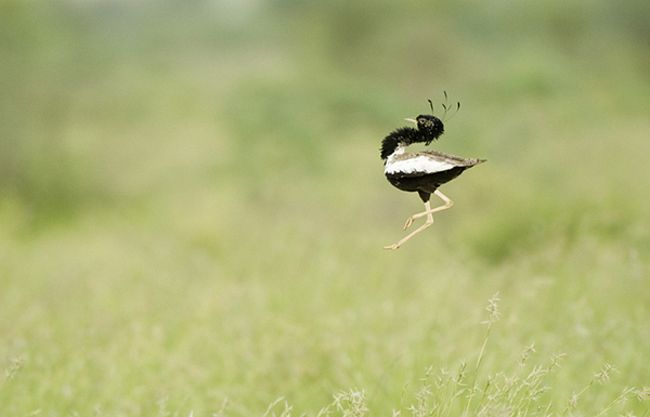
lesser_florican_display5722a
According to assistant conservator of forests, BNP, D.P. Baghela, of the 48, 44 were males and four were females. Forest officials said BNP is the only grassland in north western Indian that has observed a steady population of lesser florican. Last year, 54 were counted here.
“This year we first spotted lesser floricans in first week of July. This grassland provides an ideal habitat for lesser floricans for breeding during monsoon and started leaving before winter,” Vaghela added.
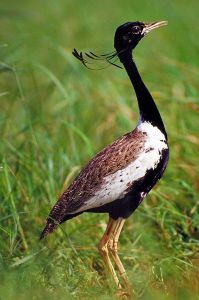
florican1

Lesser florican is endemic to the Indian subcontinent and list under Schedule 1 species under the Indian Wildlife (Protection) Act, 1972.

“Degradation of grasslands in Gondal, Rajkot and Jamnagar earlier attracted lesser floricans. But they are seldom seemed here. Velavadar National Park is the only grassland in north western Indian where floricans are reported in good number, largely due to better grassland management and protection,” he said.Forest officials said earlier, lesser floricans were found in many parts of the region, but now these birds are found at very few places in the state.

Two years ago, researcher G.S. Bharadwaj of Wildlife Institute of India (WII) carried out a study on lesser floricans from across the country. They study observed that most of the potential florican habitat in the state were converted into cotton fields where large quantities of pesticides are being used, the greatest threat to floricans here.

“Lesser florican is best known for the leaping breeding displays by males during the monsoon,” an official said.


Courtesy:- Times Of India. 

Saturday, June 1, 2013

Act before it’s too late for Great Indian Bustard, says experts

Conservation portal urges Gujarat CM to take action

Experts and conservationists believe that a project on the lines of Project Tiger has to be launched in order to save the Great Indian Bustard (GIB) that is threatened with extinction.

Prerna Singh Bindra, member of the National Board for Wildlife, said that Conservation India (CI), a wildlife conservation portal, has urged Gujarat Chief Minister Narendra Modi to take immediate measures for conservation of the threatened bustard species. “If action is not taken, this bird could become the first mega species to go extinct in the country since the cheetah. Only a ‘Project Bustard’ can save the species, just as ‘Project Tiger’ did for our national animal”, said Bindra.

According to CI’s campaign paper, “Act Now! Or say Goodbye to the Great Indian Bustard,” there may be less than 200 Great Indian Bustard left in India. In Gujarat, 50 of the threatened bustard species are to found in Kutch.

The bird has already disappeared from more the 90 per cent of its former habitats. “What is worse, the 
meager remaining number is fragmented into small populations across several Indian states, making the bird even more vulnerable to extinction. If urgent and targeted conservations actions are not taken immediately, the bird will almost certainly go extinct within the next decade or two,” says CI co-founder Ramki Sreenivasan.

The Great Indian Bustard (GIB) is found in Rajasthan, Gujarat, Maharashtra, Madhya Pradesh, Karnataka and Andhra Pradesh. The largest population of about 100 birds is in Rajasthan where it is the state bird.
The GIB is threatened with extinction because of the reduction in undistributed arid and grassland (its habitat), degradation of and distribution to its existing habitat, hunting, lack of projection for many traditional “lekking” and nesting sites, and lack of a management and conservation policy for natural grassland.

Apart from these issues, there is lack of cooperation between different departments and stakeholders in GIB habitats. Livestock overgrazing and disturbance by tourists and photographers, especially during breeding season, have also contributed to reduction in GIB numbers.

According to the campaign paper, there is a need for urgent and coordinated actions, including setting up of a secure and fully protected ‘lekking’ sites, where male bustards gather to attract females. Also there is a need to constitute a GIB task force in every state where these birds are to be found.

A full – scale ‘Project Bustard’ on the lines of Project Tiger needs to be launched for the threatened bustard species, conservationists say. The Ministry of Forests and Environment has demanded that the possibility should also be looked into.

Courtesy:- Times of India. 

Sunday, May 12, 2013

WORTH Flocking to Thol (Ahmadabad, Gujarat, India)

Paris of Sarus crane beckon bird-lovers.

If you thought, Thol (Ahmadabad, Gujarat, India) was only about migratory birds, another visit to this lake is due!. Flocks of majestic Sarus cranes have descended in the lake and near - by fields. there are at least 50 Sarus cranes here. No wonder then that bird watchers and shutterbugs are flocking to Thol (Ahmadabad, Gujarat, India) these days, braving the blistering heat.


Courtesy:- Times of India


Watch towers to deter poachers


Nalsarovar (Ahmadabad, Gujarat) also gets allocation for information network

Now on, the watchful eyes of foresters will be trained on the winged visitors from overseas that flock to Nalsarovar (Ahmadabad, Gujarat) every year. The state forest department has decided to set up watchtowers near the bank of three villages where poachers has been rampant. Officials have also decided to allocate special funds to set up an information network for Nalsarovar, a Ramsar site.


Official in Nalsarovar said that at meetings between senior officials on Monday, it was decided to have watchtowers in three sensitive villages – Darji, Ranagadh and Vekariya (Gujarat). These have sizeable population and notorious for the poaching of birds. In all, about 9000 people in these villages hunt and eat wild animals.

The meeting was held after two people from Ranagadh Village (Gujarat) were caught with 60 coots that had been trapper and whose legs and wings were broken to keep them from escaping.

These watchtowers will be equipped with closed circuit cameras and in order to prevent damage, one hidden camera will also be installed to catch poachers who will manage to find the visible ones.

Sources in the department said that against the sanctioned strength of 12, there are just six staffers – including the deputy conservator of forests and assistant conservator of forests. With just half the sanctioned strength, officials have to keep watch over 1.5 lakh winged visitors and thousands of tourists to the wetland spread over 120.82 sq km.

“There are only three guards to secure the highly sensitive site, which has communities known for poaching living nearby”, said a source. It was decided at the meeting that staff strength would be increased to ensure illegal activities are monitored efficiently. 

Courtesy:- Times Of India.

Monday, May 6, 2013

Vulture count on a rise thanks to Asiatic Lions


Vulture population may be on a decline across Gujarat but the number of these fast diminishing scavengers has surprisingly risen in Bhanvnagar (Gujarat, India) and Amreli districts (Gujarat, India). Interestingly, it is the lions that are helping these endangered birds make this region their permanent habitat.

The number of vultures in the 70-km coastal stretch from Mahua-Rajula-Nageshree (Gujarat, India) has steadily increased from an all time low of 87 in 2010 to 134 in 2013. In fact, the extremely rare Eurasian Griffon specie of vultures that were only winter visitors of Mahuva, are now seen throughout the year.  

vul8

Besides serious conservation efforts and people’s awareness, wildlife experts also attribute the increase to the presence of large number of lions in the revenue land in this region. Vultures feast on the animals that have been preyed upon by lions.

“Since these lions are out of forests area, they mostly kill domestic cattle and feed on them in open fields. Moreover, these animals are untreated and not administered Diclofenac, which is the sole reason for vulture’s decline. This helps vultures to have a healthy food chain, a critical aspect for their survival,” said Ruchi Dave, honorary wildlife warden, Bhavnagar district (Gujarat, India).

Recently, wildlife enthusiasts spotted 25 endangered vultures including two Eurasian Griffons, feedin on the carcass left behind by an Asiatic Lion near Rajula in Amreli District (Gujarat, India).

“Few days ago mi spotted eight vultures feasting on an animal killed by Lions. Such a sight is quite common now”. Said Jasubhai Mobh, a Maldhari living in Mobh Nesh near Khambha.

Lions are in good numbers in Mahuva, Rajula, Khambha, Jafrabad and Savarkundla (Gujarat, India) area and most of them are out of protected forest area. “There are over 75 lions in his 70 km area and most of them are in revenue area. We have often seen vultures eating the lion’s kill in these areas,” said Vipul Laheri, honorary wildlife warden, Amreli (Gujarat, India).

Notably, Bombay Natural History Society (BNHS) has selected the Mahuva area as one of the six provisional Vultures’ safe Zone on the country.

Lions’ presence in this ‘vulture’ zone has helped these birds stay put. “Eurasian Griffon vultures have been observed throughout the year, which indicated that this area is non-disturbed habitat for vultures,” Dave said. 

Courtesy:- Times of India. 


Sunday, February 24, 2013

Sharp decline in number of vultures, just 1043 left in state


Junagadh (Gujarat, India) Breeding centre starts Delivering results

The government appears to be doing precious little for improving the vulture count in the state. While their numbers have dropped to 1043 which is the lowest count registered so far, the government has so far spent only Rs. 19.70 lakhs for their conservation in the last two years.

The count recorded in 2007 was 2539 and ever since then, there has been a sharp decline. Their number was 1431 in 2008 and 1043 in May 2010.

In written reply to a question from Wakaner (Rajkot, Gujarat, India) MLA Mohammed Javed Pirzada, environment and forest minister Ganpat Vasava said that apart from an awareness campaign to conserve vultures, the government has also started a vulture breeding centre at Sakkarbaugh Zoo in Junagadh (Gujarat, India). In addition to this, the union government has banned the use of Diclofenac treatment by vets, especially on cattle.


Vasava claimed that the centre at Sakkarbaugh Zoo has started showing results in the form of a White Rumped vulture being bred successfully. Two vultures have been born there in the last 2 years.
Officials said that vulture conservation in Gujarat has got a major boost with the Bombay Natural History Society (BNHS) selecting Mahuva (Rajkot, Gujarat, India) and Ahmadabad among the six provisional Vulture Safe Zones (VSZ) in India.

A recent survey has indicated that the current state wide estimated population of ‘critically endangered’ Gyps vultures is 938, White- Rumped vultures is 577 and Long Billed Vultures is 361.


The survey has shown a reduction of 11.34 per cent in the population of Gyps vultures between 2010 and 2013. In 2010, there were 1,065 Gyps vultures. In the survey carried last year, 97 Egyptian vultures and eight Red headed vultures have been enumerated.

Courtesy:- Times Of India (Saturday, 23rd February, 2013).

Saturday, February 16, 2013

Great Indian Bustard (GIB) census starts in Rajasthan, India

The state level winter census of the Great Indian Bustard (GIB) started from February 10th in the state. The GIB is a bird which is on the verge of extinction.

Chief forest conservator, wildlife, Jodhpur, (Rajasthan, India) Govind Sagar Bhardwaj, has been appointed the nodal officer for the census. Only 100 Great Indian Bustard (GIB) is alive in the country and nearly 50 of them are in Jaisalmer(Rajasthan, India).

A workshop for the census was organized at a Hotel in Jaisalmer (Rajasthan, India) on Friday, in which six forest divisions, voluntary organizations and army jawans participated.


Deputy conservator of forests, ML Sonal informed the participants about the wildlife census. State wildlife board, Jaipur, Rajasthan, India member Rajpal Singh was the guest of honor.

Information about the preparations for the census, deputy forest conservator Karan Singh said that this time the transit lines have been increased and five new tracks have been laid outside the Desert National Park. A control room has been set up at the wildlife office. The team constituted for census work will be provided with a wireless set, head set, GPS, binoculars, etc. the census will be carried out on the scheduled track on camels and on foot.


Deputy forest conservator, Desert national Park, GK Verma, regional forest officer Pankaj Gupta, assistant forest conservator Rewat Singh Godara and regional forest officers also took part in the workshop. Assistant forest conservator (wildlife) VK Bissa, who conducted the workshop, gave a vote of thanks.

During December last year, a Great Indian Bustard (GIB) was poached; bit till date there is no clue of the poachers. Human interference is responsible for the diminishing numbers of these birds as it prevents the shy bird from breeding.

The state government and the center appear indifferent towards saving the bird. Although, a plan for GIB conservation has been sent to the center, but no action has been taken so far.

Courtesy:- Times Of India (Monday, 11th, February, 2013)

Tuesday, February 12, 2013

Decline rate of vultures in India slows


Vultures may not be the most pleasant birds to contemplate, given their not so pleasant appearance and association with death, but they serve a vital role in an Eco - system by eating dead fish.
vultures
Throughout India, vulture populations have plummeted to less than one percent of what they were a few decades age, leading to an epidemic of unseen cattle carcasses and spawning an increase in the number of rats, feral dogs and human rabies cases for dog bites.
But they may be some hope for these much maligned birds: Their decline had slowed, stopped or even reversed in some areas of the Indian Subcontinent, according to a paper published on February 7th in the journal Science.

The birds declined largely because ranchers started giving their cattle an anti inflammatory drug called diclofenac that the birds ingested when they ate the dead cattle, paper author and Cambridge researcher Andrew Balmford said. In 2006, following revelations that diclofenac was deadly to the birds, the government of India, Pakistan and Nepal banned the use of the drug for cattle.

Bangladesh followed in 2010, and in May 2012 the four governments reached an ‘unprecedented political agreement’ to prevent unintentional poisoning of the vultures from veterinary drugs, Balmford told OurAmazingPlanet.
images (1)


Many ranchers have adopted an alternative drug that is safe to vultures, Balmford said, but the increase of other drugs in concerning, especially one that’s close in structure to diclofenac, Balmford said. Restrictions on these drugs are needed, he added.

Nevertheless, vulture numbers have leveled off in many areas, and increase elsewhere.


Courtesy:- Times Of India