Saturday, June 1, 2013

Act before it’s too late for Great Indian Bustard, says experts

Conservation portal urges Gujarat CM to take action

Experts and conservationists believe that a project on the lines of Project Tiger has to be launched in order to save the Great Indian Bustard (GIB) that is threatened with extinction.

Prerna Singh Bindra, member of the National Board for Wildlife, said that Conservation India (CI), a wildlife conservation portal, has urged Gujarat Chief Minister Narendra Modi to take immediate measures for conservation of the threatened bustard species. “If action is not taken, this bird could become the first mega species to go extinct in the country since the cheetah. Only a ‘Project Bustard’ can save the species, just as ‘Project Tiger’ did for our national animal”, said Bindra.

According to CI’s campaign paper, “Act Now! Or say Goodbye to the Great Indian Bustard,” there may be less than 200 Great Indian Bustard left in India. In Gujarat, 50 of the threatened bustard species are to found in Kutch.

The bird has already disappeared from more the 90 per cent of its former habitats. “What is worse, the 
meager remaining number is fragmented into small populations across several Indian states, making the bird even more vulnerable to extinction. If urgent and targeted conservations actions are not taken immediately, the bird will almost certainly go extinct within the next decade or two,” says CI co-founder Ramki Sreenivasan.

The Great Indian Bustard (GIB) is found in Rajasthan, Gujarat, Maharashtra, Madhya Pradesh, Karnataka and Andhra Pradesh. The largest population of about 100 birds is in Rajasthan where it is the state bird.
The GIB is threatened with extinction because of the reduction in undistributed arid and grassland (its habitat), degradation of and distribution to its existing habitat, hunting, lack of projection for many traditional “lekking” and nesting sites, and lack of a management and conservation policy for natural grassland.

Apart from these issues, there is lack of cooperation between different departments and stakeholders in GIB habitats. Livestock overgrazing and disturbance by tourists and photographers, especially during breeding season, have also contributed to reduction in GIB numbers.

According to the campaign paper, there is a need for urgent and coordinated actions, including setting up of a secure and fully protected ‘lekking’ sites, where male bustards gather to attract females. Also there is a need to constitute a GIB task force in every state where these birds are to be found.

A full – scale ‘Project Bustard’ on the lines of Project Tiger needs to be launched for the threatened bustard species, conservationists say. The Ministry of Forests and Environment has demanded that the possibility should also be looked into.

Courtesy:- Times of India. 

Sunday, May 12, 2013

No Drought of winged beauties


Despite the erratic rainfall and drying water bodies around the city, there is a silver lining. Ishwaria Lake on the outskirts of Rajkot (Gujarat, India) has literary turned into an oasis for thousands of wetlands birds. Spread over 40 hectares of wasteland at Madharpar village, Ishwaria (Rajkot, Gujarat, India) plays host to thousands of migratory birds from far away places like Siberia and Mongolia in winter and resident birds through out the year. the lake is a major attraction for bird lovers from far and near.

nalsarovar3


nalsarovar33


Courtesy:- Times of India

WORTH Flocking to Thol (Ahmadabad, Gujarat, India)

Paris of Sarus crane beckon bird-lovers.

If you thought, Thol (Ahmadabad, Gujarat, India) was only about migratory birds, another visit to this lake is due!. Flocks of majestic Sarus cranes have descended in the lake and near - by fields. there are at least 50 Sarus cranes here. No wonder then that bird watchers and shutterbugs are flocking to Thol (Ahmadabad, Gujarat, India) these days, braving the blistering heat.


Courtesy:- Times of India


Watch towers to deter poachers


Nalsarovar (Ahmadabad, Gujarat) also gets allocation for information network

Now on, the watchful eyes of foresters will be trained on the winged visitors from overseas that flock to Nalsarovar (Ahmadabad, Gujarat) every year. The state forest department has decided to set up watchtowers near the bank of three villages where poachers has been rampant. Officials have also decided to allocate special funds to set up an information network for Nalsarovar, a Ramsar site.


Official in Nalsarovar said that at meetings between senior officials on Monday, it was decided to have watchtowers in three sensitive villages – Darji, Ranagadh and Vekariya (Gujarat). These have sizeable population and notorious for the poaching of birds. In all, about 9000 people in these villages hunt and eat wild animals.

The meeting was held after two people from Ranagadh Village (Gujarat) were caught with 60 coots that had been trapper and whose legs and wings were broken to keep them from escaping.

These watchtowers will be equipped with closed circuit cameras and in order to prevent damage, one hidden camera will also be installed to catch poachers who will manage to find the visible ones.

Sources in the department said that against the sanctioned strength of 12, there are just six staffers – including the deputy conservator of forests and assistant conservator of forests. With just half the sanctioned strength, officials have to keep watch over 1.5 lakh winged visitors and thousands of tourists to the wetland spread over 120.82 sq km.

“There are only three guards to secure the highly sensitive site, which has communities known for poaching living nearby”, said a source. It was decided at the meeting that staff strength would be increased to ensure illegal activities are monitored efficiently. 

Courtesy:- Times Of India.

Monday, May 6, 2013

Vulture count on a rise thanks to Asiatic Lions


Vulture population may be on a decline across Gujarat but the number of these fast diminishing scavengers has surprisingly risen in Bhanvnagar (Gujarat, India) and Amreli districts (Gujarat, India). Interestingly, it is the lions that are helping these endangered birds make this region their permanent habitat.

The number of vultures in the 70-km coastal stretch from Mahua-Rajula-Nageshree (Gujarat, India) has steadily increased from an all time low of 87 in 2010 to 134 in 2013. In fact, the extremely rare Eurasian Griffon specie of vultures that were only winter visitors of Mahuva, are now seen throughout the year.  

vul8

Besides serious conservation efforts and people’s awareness, wildlife experts also attribute the increase to the presence of large number of lions in the revenue land in this region. Vultures feast on the animals that have been preyed upon by lions.

“Since these lions are out of forests area, they mostly kill domestic cattle and feed on them in open fields. Moreover, these animals are untreated and not administered Diclofenac, which is the sole reason for vulture’s decline. This helps vultures to have a healthy food chain, a critical aspect for their survival,” said Ruchi Dave, honorary wildlife warden, Bhavnagar district (Gujarat, India).

Recently, wildlife enthusiasts spotted 25 endangered vultures including two Eurasian Griffons, feedin on the carcass left behind by an Asiatic Lion near Rajula in Amreli District (Gujarat, India).

“Few days ago mi spotted eight vultures feasting on an animal killed by Lions. Such a sight is quite common now”. Said Jasubhai Mobh, a Maldhari living in Mobh Nesh near Khambha.

Lions are in good numbers in Mahuva, Rajula, Khambha, Jafrabad and Savarkundla (Gujarat, India) area and most of them are out of protected forest area. “There are over 75 lions in his 70 km area and most of them are in revenue area. We have often seen vultures eating the lion’s kill in these areas,” said Vipul Laheri, honorary wildlife warden, Amreli (Gujarat, India).

Notably, Bombay Natural History Society (BNHS) has selected the Mahuva area as one of the six provisional Vultures’ safe Zone on the country.

Lions’ presence in this ‘vulture’ zone has helped these birds stay put. “Eurasian Griffon vultures have been observed throughout the year, which indicated that this area is non-disturbed habitat for vultures,” Dave said. 

Courtesy:- Times of India. 


Sunday, April 14, 2013

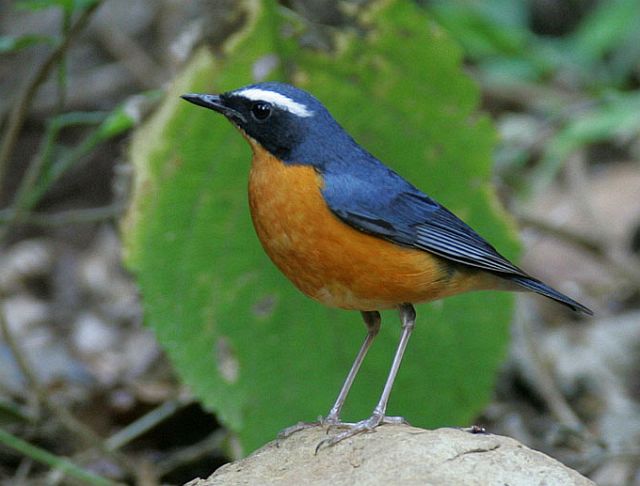
Rare Indian blue Robin spotted in Gir Sanctuary (Gujarat, India)


It was a pleasant surprise for bird watchers Ashok Mashru and his colleagues on Dhuleti when they spotted the rare Indian blue Robin in Girnar Wildlife Sanctuary (Gujarat, India). 

indian robbin

According to Mashru, the bird was earlier recorded by renowned ornithologist Lavkumar Kachar in 1996 at Hingolgadh near Jasdan of Rajkot district when it was going to south Indian in autumn.

“It may be possible that Indian blue Robbin, which we spotted, was going back to North India. The species breed in Himalaya. By all chances, this is only the second time that it has been sighted in Guajrat after 18 years,” Mashru said.

Bird watchers say Indian blue Robbin may be a passage migrant. This specie commonly spends winter in hills of Kerala and Sri Lanka. 

Courtesy:- Times of India 

Saturday, March 30, 2013

For Saurashtrians(Gujarat, India), “lions are like kin”


The people of Saurashtra(Gujarat, India) take care of lions as they would of their family members. If they spot a lion iIMG_3668n the vicinity of their village, they take pride in the fact and protect it. These statements were made by the government in the assembly for the first time.

Minister of state for forests and environment Govind Patel – in response to a question from Nikol MLA Jagdish Panchal – informed the house that lions were found in many places of India, but they survive only in Gujarat owing to people’s conservation efforts.

“They are the pride of Gujarat and it was only because of the people of Saurashtra that the lion population grew,” Patel said.

“Even if lions attack cattle in villages, the villagers are tolerant of lions”.
Patel told the house that government has also created post of ‘van mitras’ who take care of the animal and keep a watch on the movement inside the sanctuary. He said 898 eco-clubs had been formed in the Saurashtra region.

Responding to a question Patel said that there were 411 lions – 97 males and 162 females – in the sanctuary. He further said that the state had created gene – pool centers. Five new cubs have been born in the last year at the Rampara Virdi centre. These cubs have been born to two pairs of lions captured from completely different areas and brought to Rampara to ensure that the genes different. These centre’s provide a shield against weakening genes of Gir Lions.

For example if the lioness was from Sasan (Gujarat, India), the lion would be from a far off area of Tulsishyam(Jungadh, Gujarat, India) or even Bhavnagar. The minister said that there have been no instances of villagers offering baits to lions in order to show the animals to visitors. However, he admitted that his department had penalized people caught on the spot to the tune of Rs. 93,000 to Rs 31,400.

Courtesy: Times of India.